The reactor was down within 24 hours but I learned a lot!
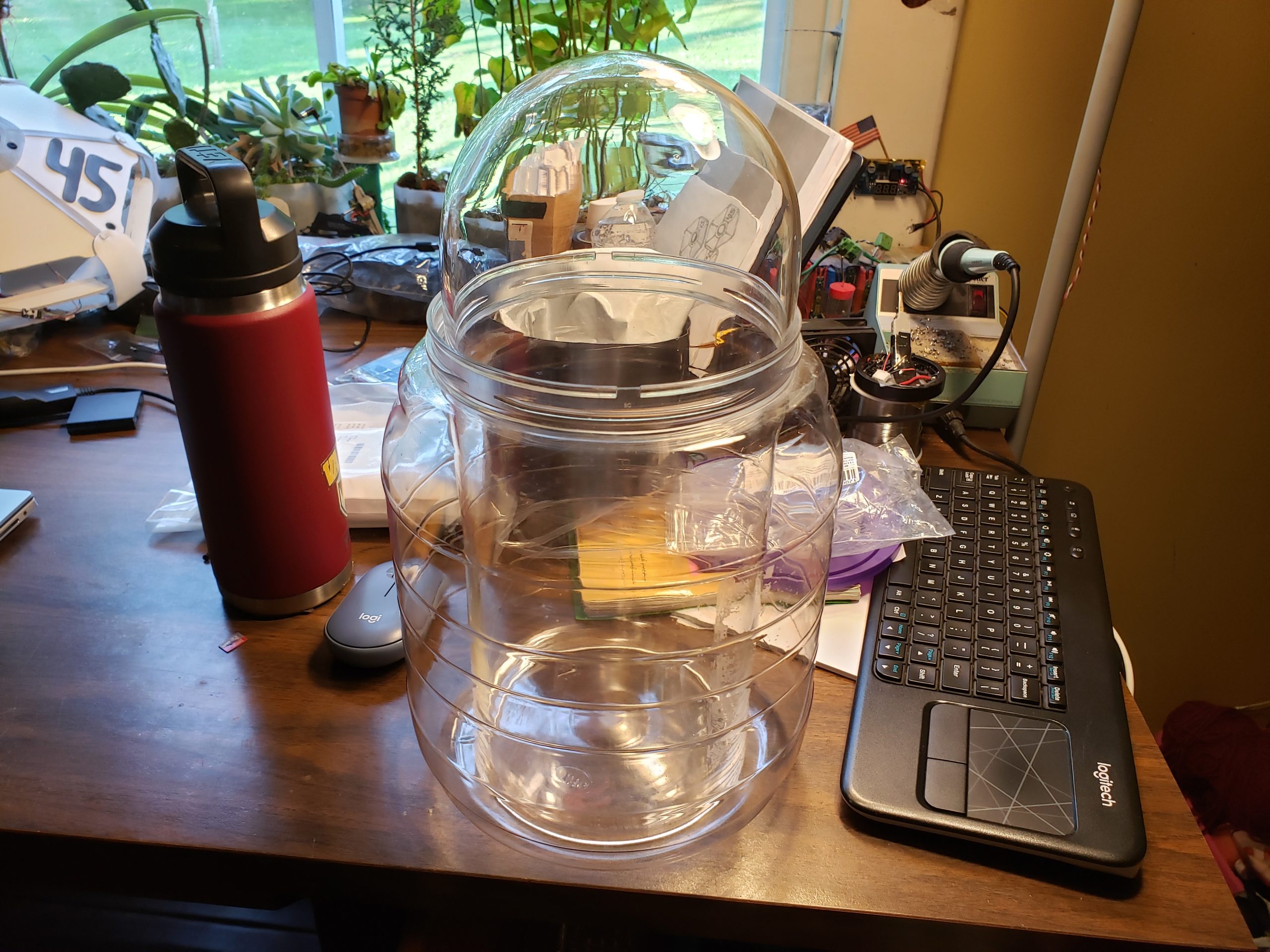
The design for the V2 tile is based around a Mylar balloon (BoPET) and I needed a lifting gas I could generate at home for cheap. I remembered my experience generating hydrogen in highschool with electrolysis and I decided to make a larger version of that. I used a Sodium hydroxide (NaOH) this time which is a much stronger base then the baking soda I was using in my highschool reactor. This was the main casue of the short life of the reactor.
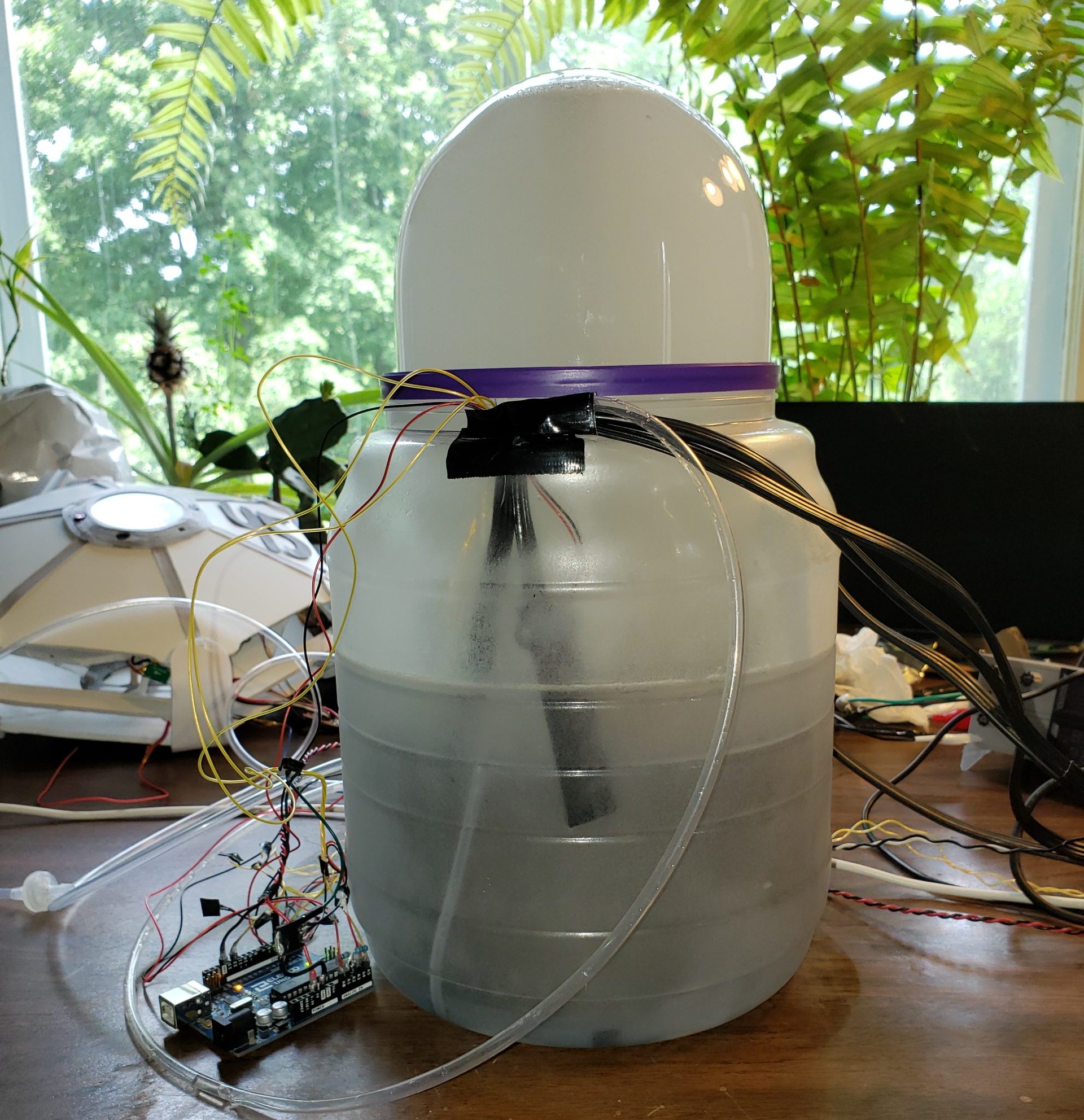
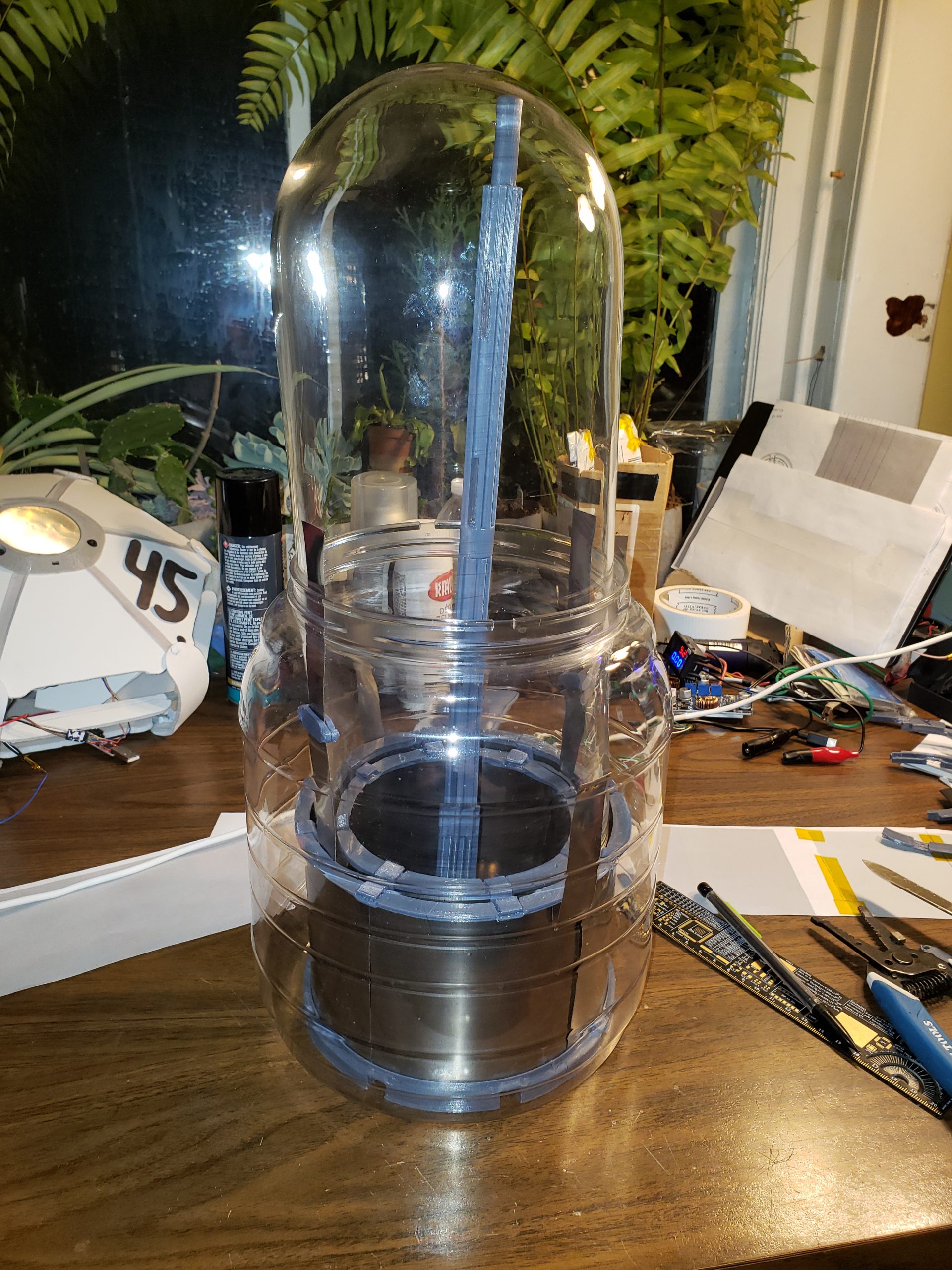
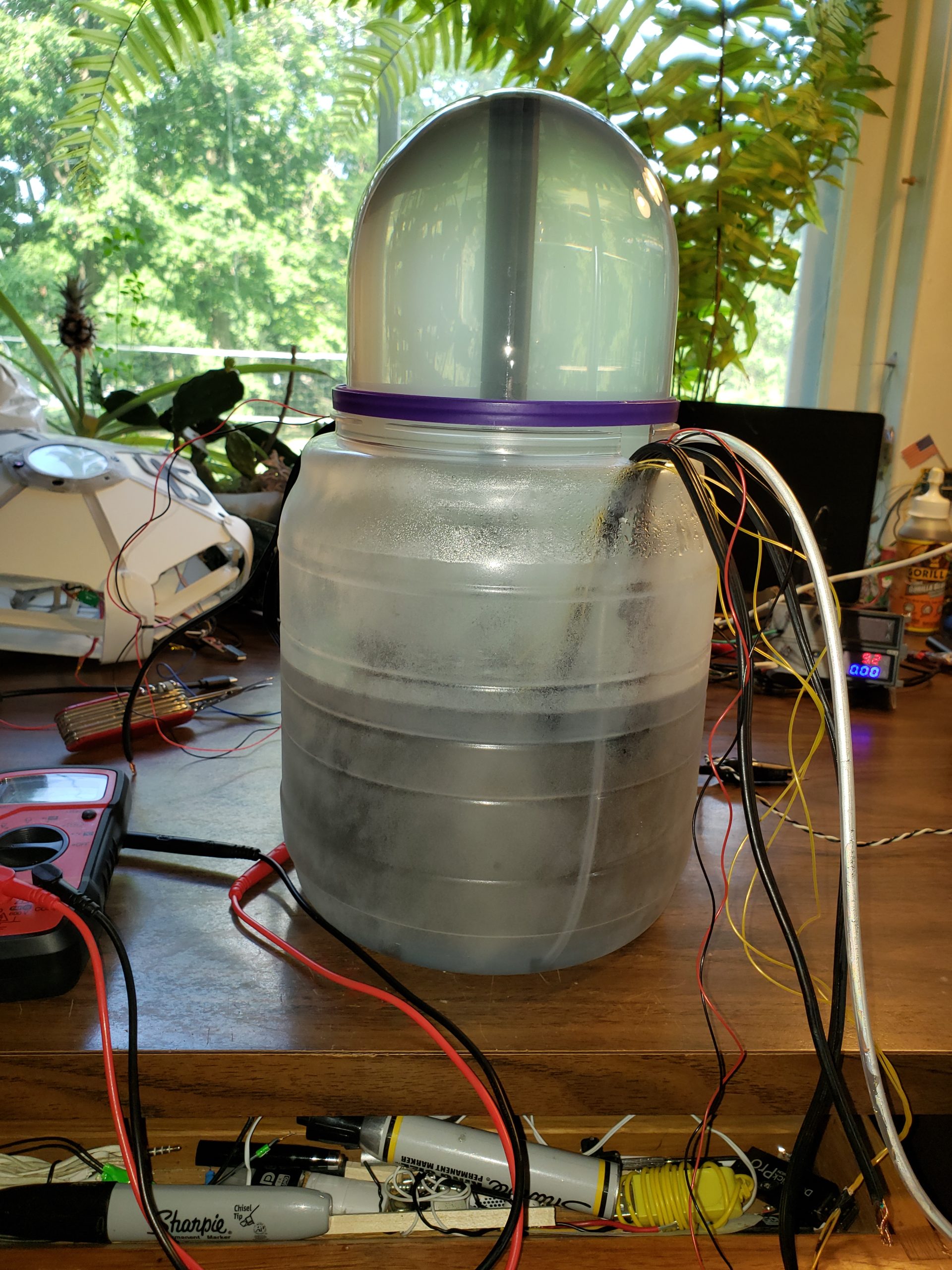
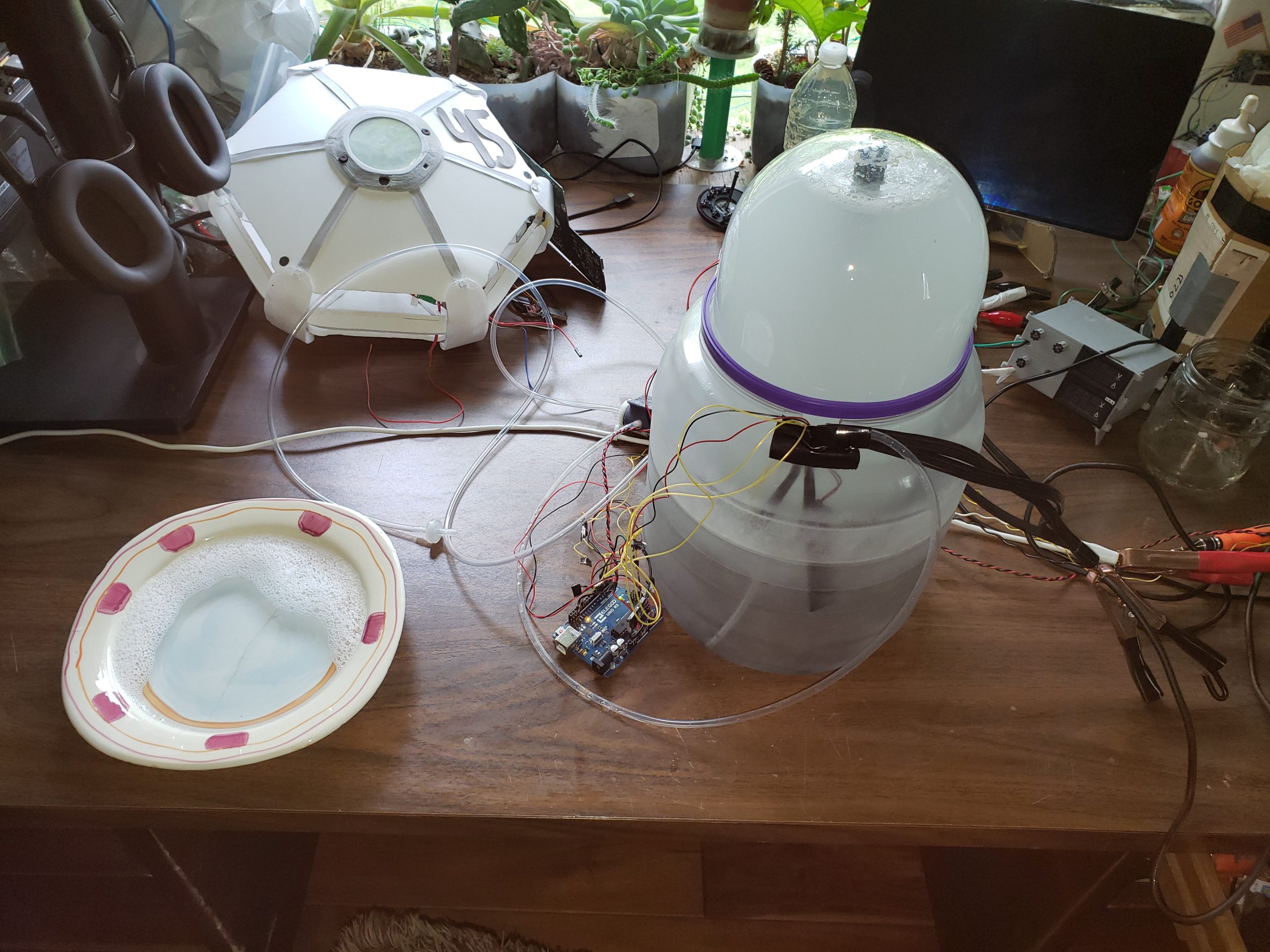
Full Reactor Design and Circuit
It ended up being more complicated then I initially thought
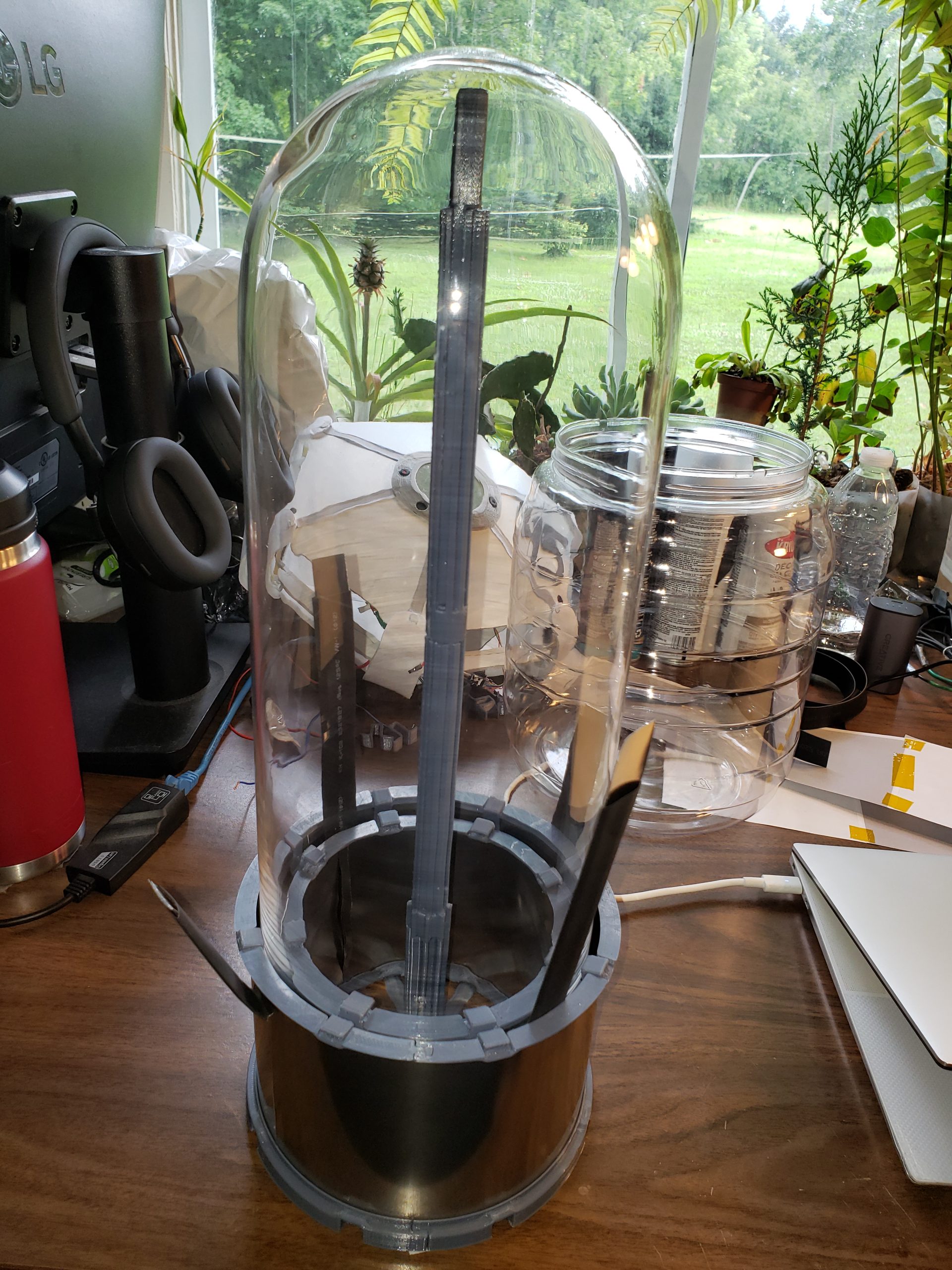
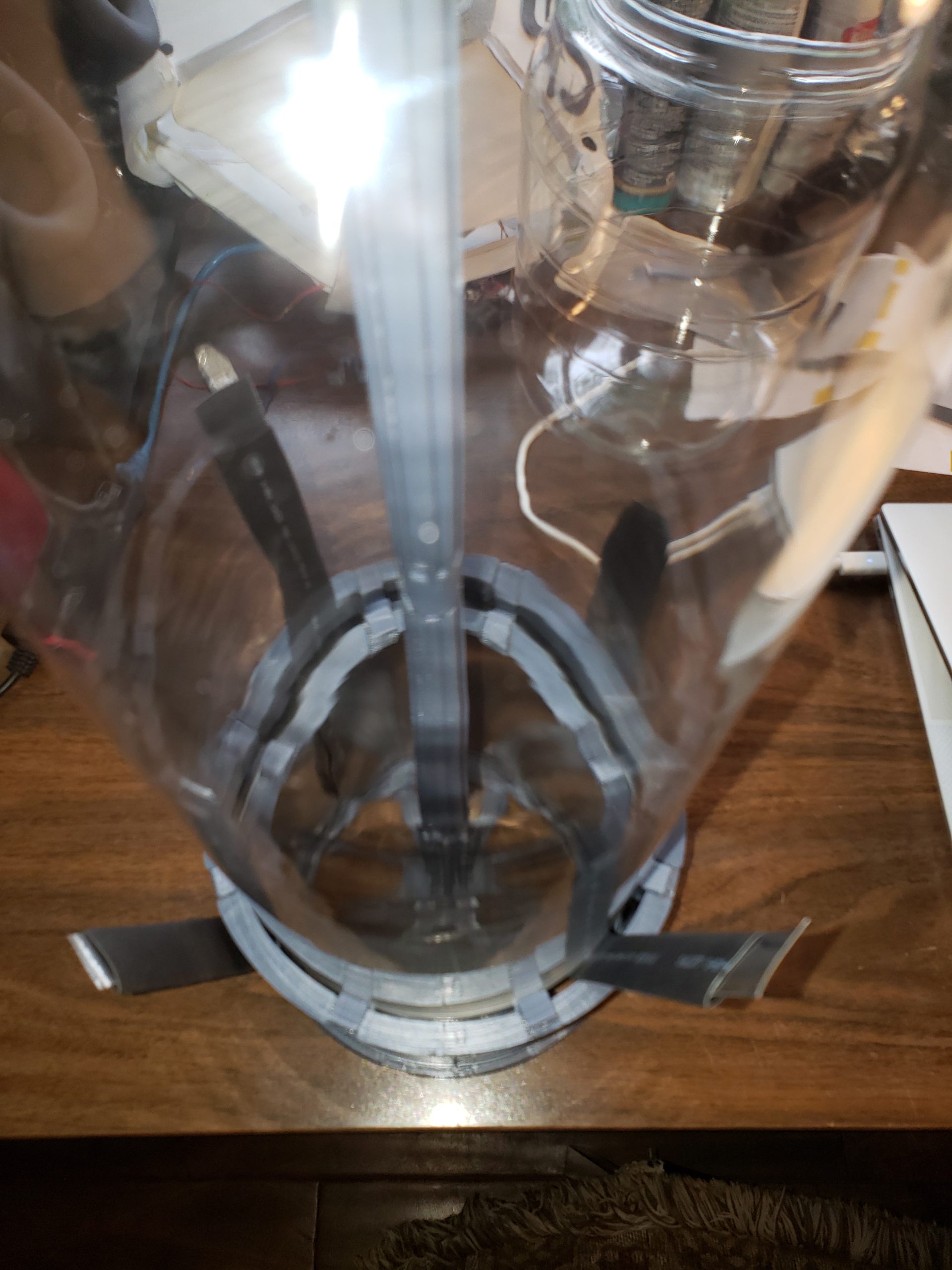
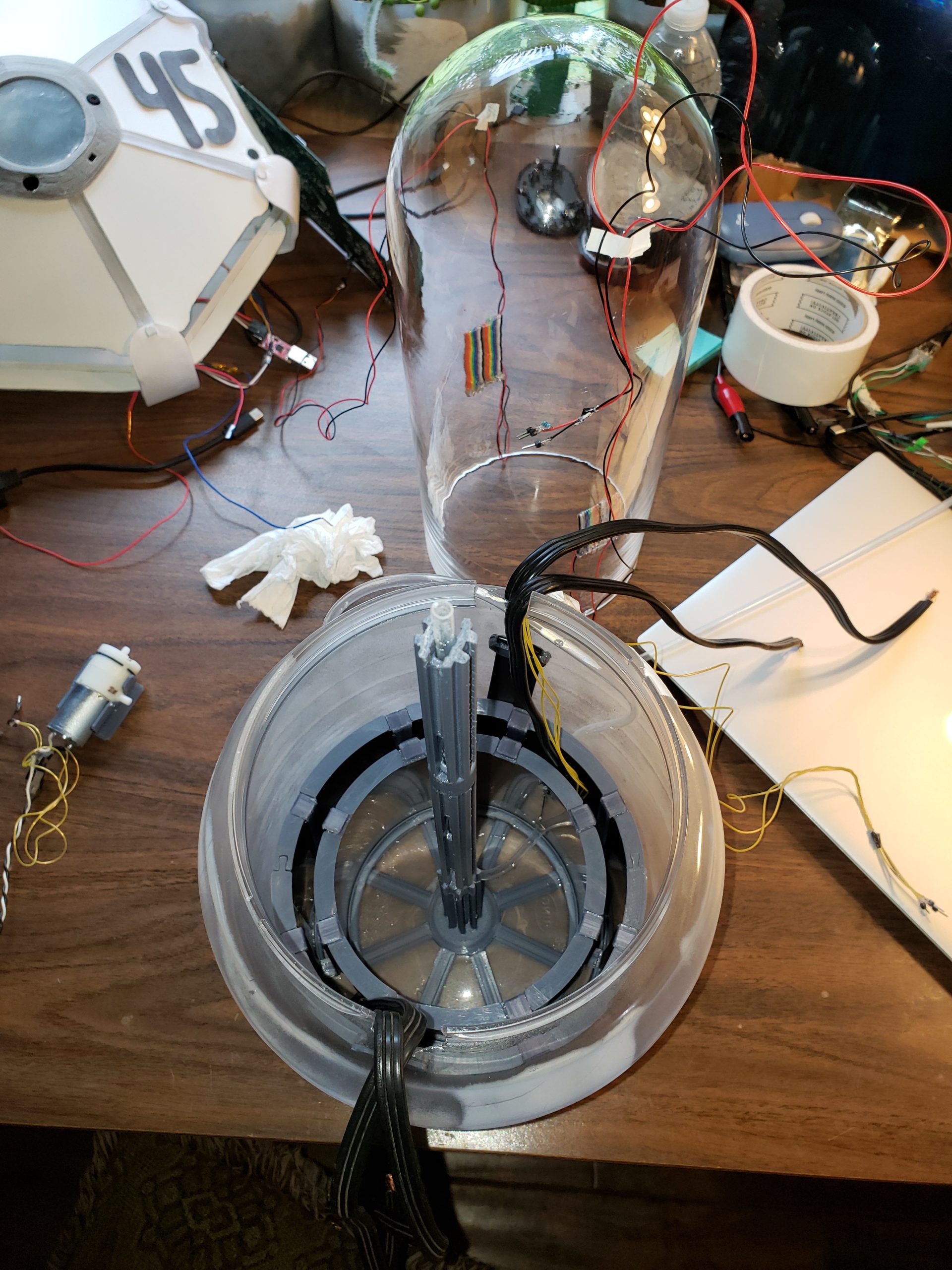
The NaOH was pretty nasty so I wanted to keep it contained. I need one sensor at the bottom of the glass bell to tell when I’m running out of water and one at the top of the plastic container to stop overflowing the solution. The electrolyte was two pounds of NaOH dissolved in about 2 gallons of water. I was aiming for a 15% concentration but this was more like 10%. This was high enough because the solution liked to dissolve anything it touched. I’ll go into that more later.
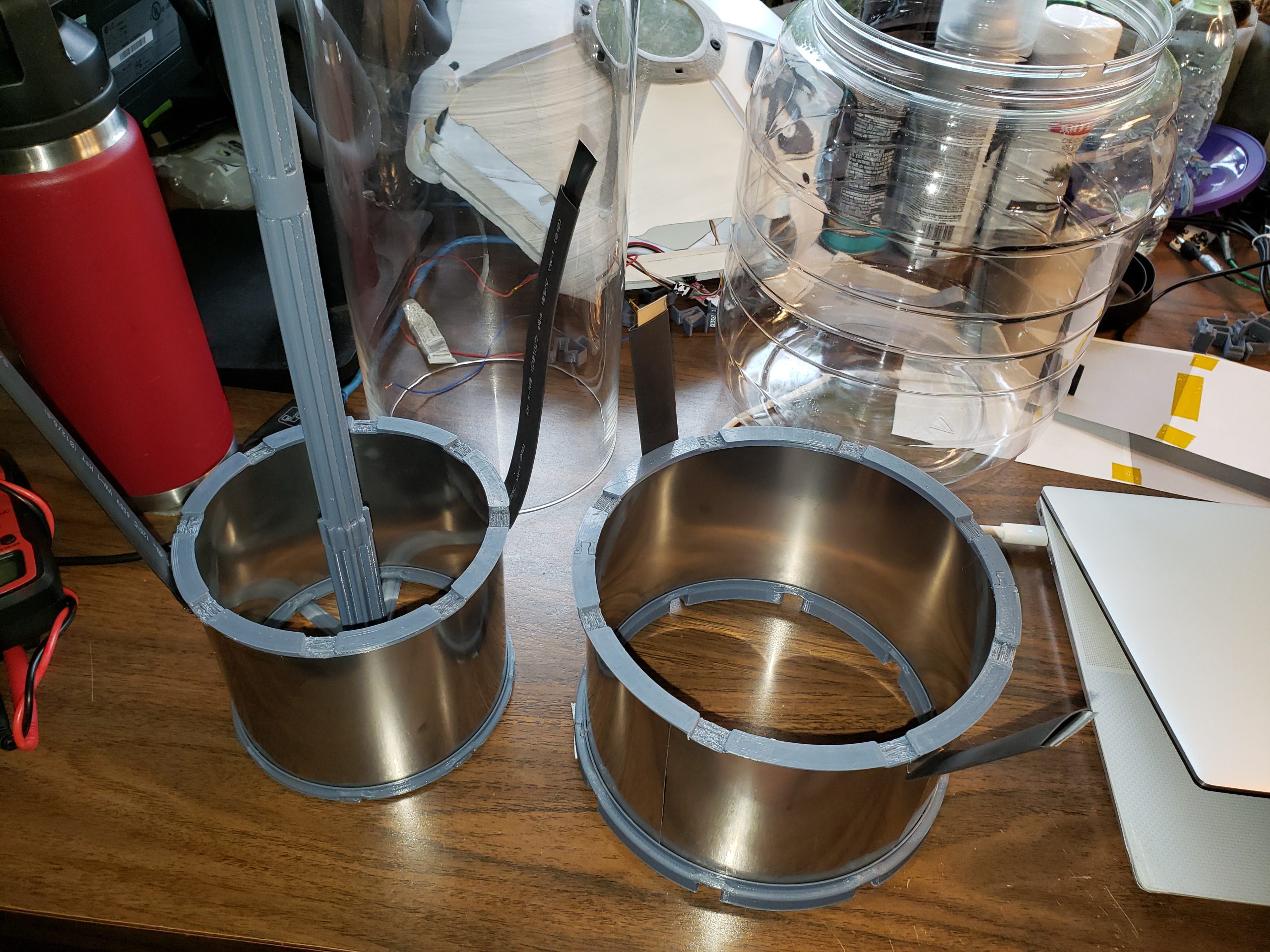
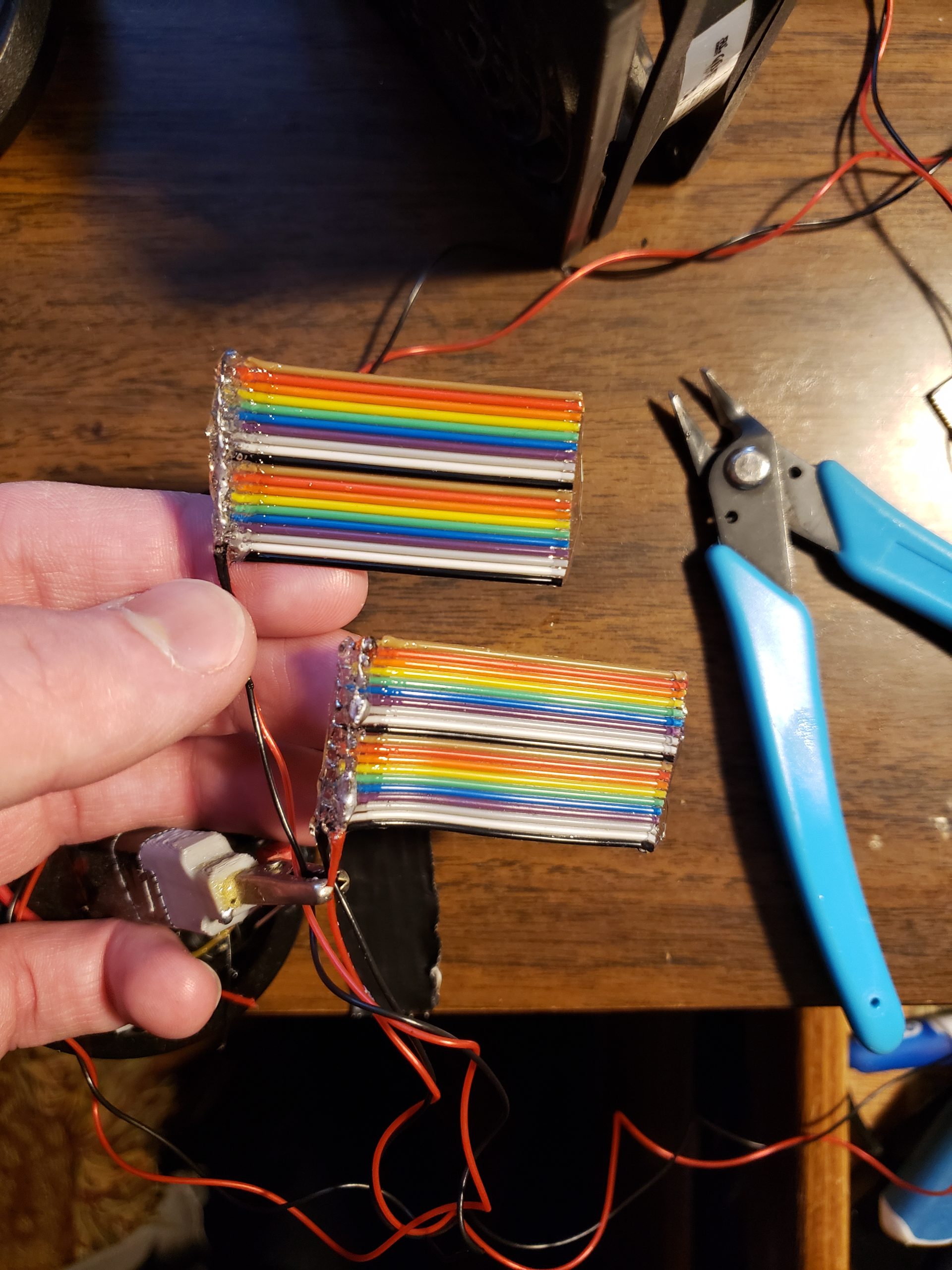
I used titanium plates for the electrodes which have about 4% the conductivity of copper so I needed two leads and a higher voltage. The breakdown of water in electrolysis occurs about 2V but my resistance was much higher so I stuck with the 12V of my server PSU. A buck converter is used to provide 5V to the control circuit.
PETG Wasn't Enough
Plastics become brittle or turn to mush when exposed to NaOH
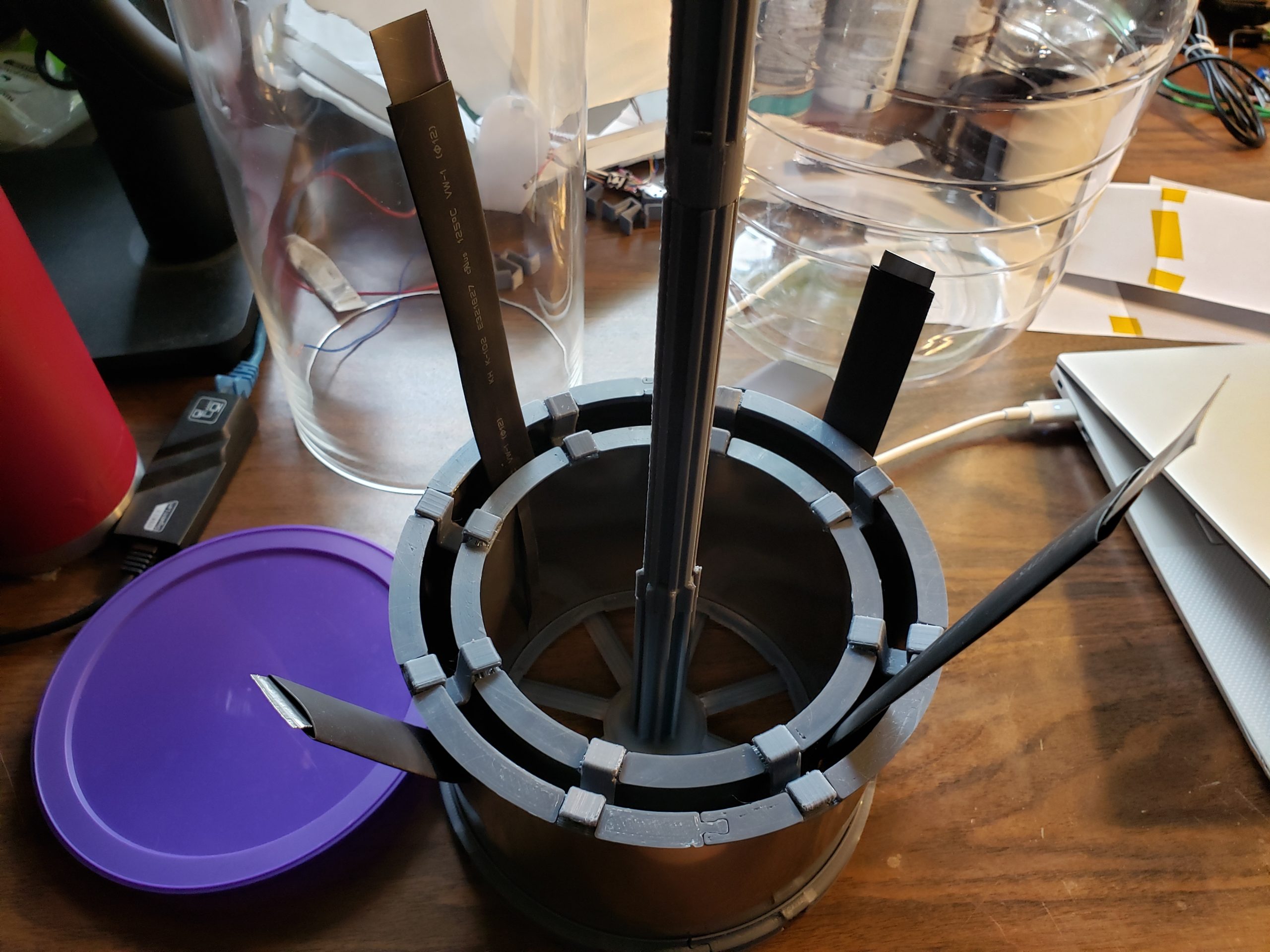
The grey PETG seemed to hold up ok but I ran out of that when printing at VU. I thought clear-grey PETG would be a good substitute but it ended up dissolving within a few hours. The central tube holder ended up supporting the glass bell for the duration of my testing. When I disassembled the reactor I found that the thinner plastic sections were breaking on everything. The plastic container had a crack where the slight weight of the wire leaned on it. For the new reactor I need to make all the plastic sections thicker and I need to coat every plastic surface in epoxy.
The opaque gallon milk jug I used to mix the NaOH solution didn’t degrade though. This was even after the “heat of hydration” where the NaOH separating into its ions produces heat. The milk jug felt like it was going to melt in my hands so I ran cold water over it after mixing dissolving the NaOH.
Assessing The Damage
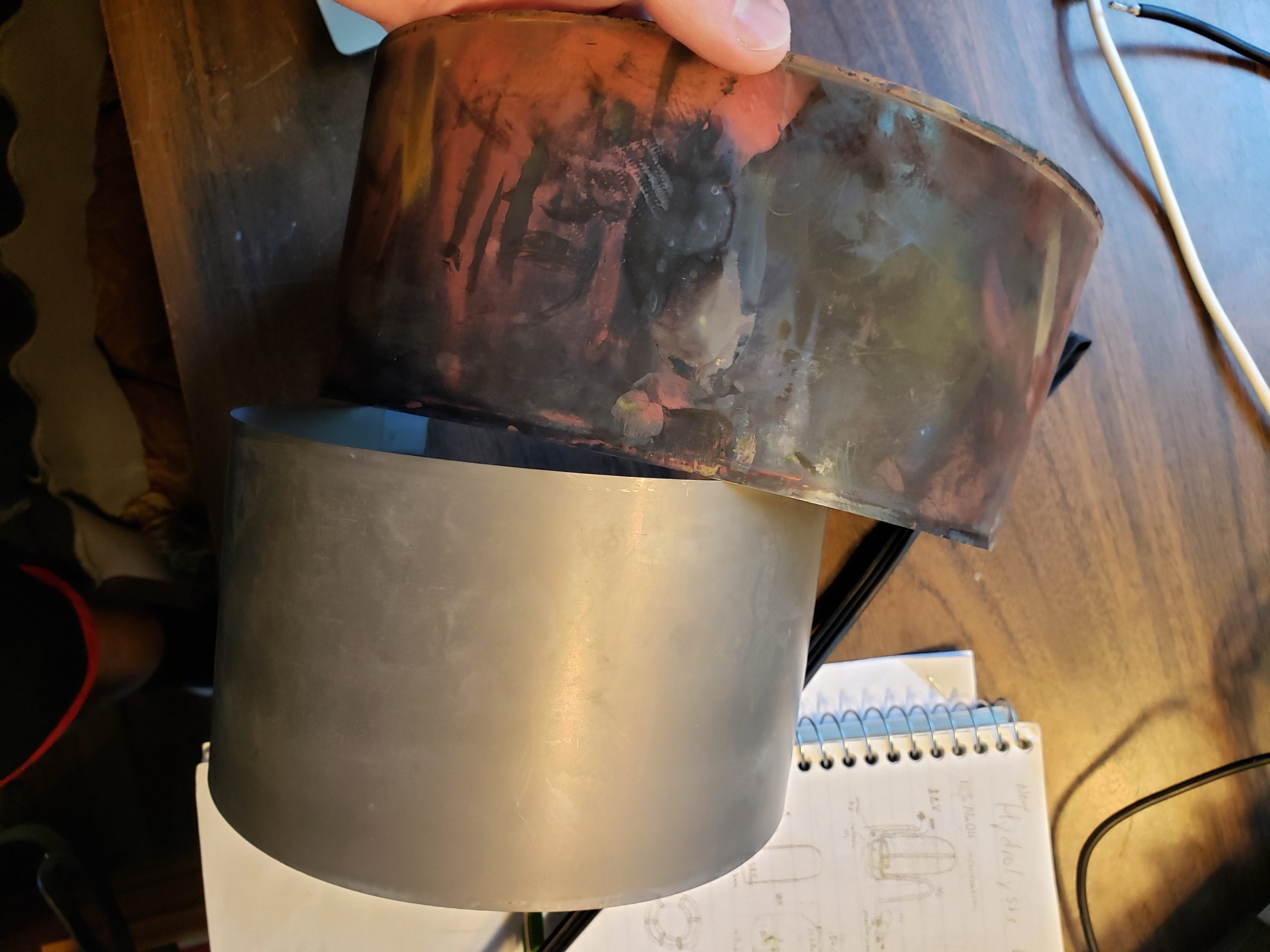
The Anode is fine but the Cathode didn’t get as lucky
The reactor I build in highschool used iron plates from a transformer which got rusty quickly. The anode is where the oxygen is produced so it rusted thoroughly. This new titanium reactor is the opposite. Titanium forms a passive protective layer of titanium oxide on its surface so the anode was fine. You can see it is slightly discolored in the picture but the cathode took the real beating. Turns out this is due to hydrogen embrittlement. The titanium becomes Titanium hydride by bonding with the hydrogen produced at the cathode. My plan to get around this is to use pure nickel for the cathode which is more conductive and more resistant (and more expensive).
To top the cracked container and the corroded electrodes, the copper wire leading to the anode eventually corroded away. I got some hydrogen out of the reactor but it had some oxygen in it along with other contaminants from the dissolved plastic. HHO is unstable water and is explosive so I need to keep oxygen out.
I needed to replace the reactor and get rid of all the electrolyte. Turns out I would’ve needed ~7.5 gallons of store bought vinegar to properly neutralize the electrolyte. I only added one gallon and diluted it with several more gallons of water. I had gloves for the final disposal but I did touch the solution before that. My hands have been very dry for the past week but nothing I couldn’t handle. I spilled some NaOH solution on the walkway out my back door and despite diluting it with lots of hose water, it still killed some grass. I’m fine and I learned a lot about how dangerous and destructive this base can be. I’ll make sure to be safer next time.
Final Server Iteration (Hopefully)
This server does a lot more then host my website so it needs to be up to the task
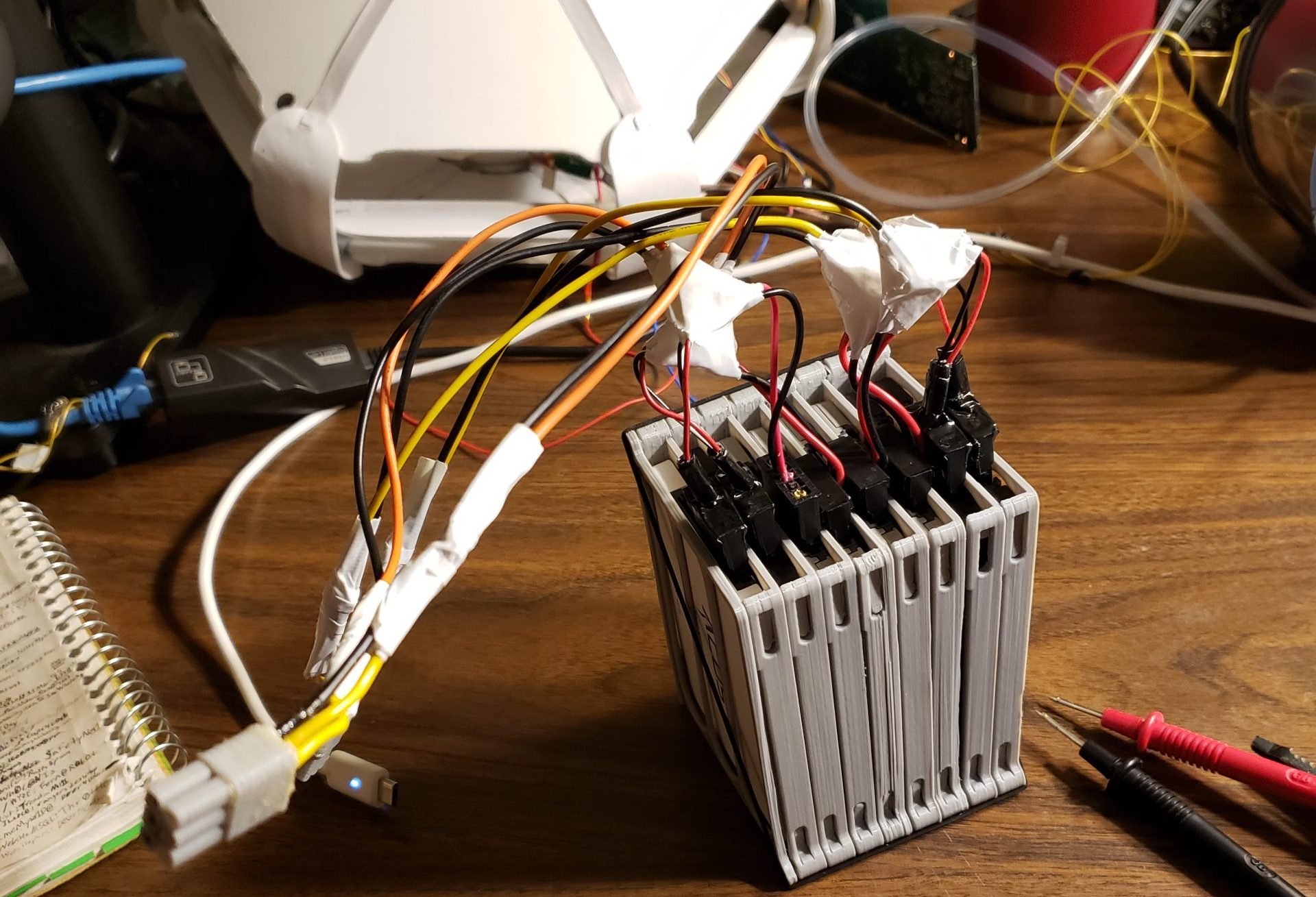
The issue was with my VDI setup. I was using two cheap SSDs to provide the storage to my 4 windows VMs. I needed more IOPS (Input/Output Operations Per Second) to handle all the storge requirements of the VMs. Installing or copying large files on multiple VMs would lead to instability and crashes. My solution was to get proper intel server SSDs for each of the VMs. This was likely overkill but they were the cheapest SSDs I could get on Ebay at the time. I finally got bitten in the back for buying cheap SSDs from China.
This Week's Gallery:
Perfect fit!
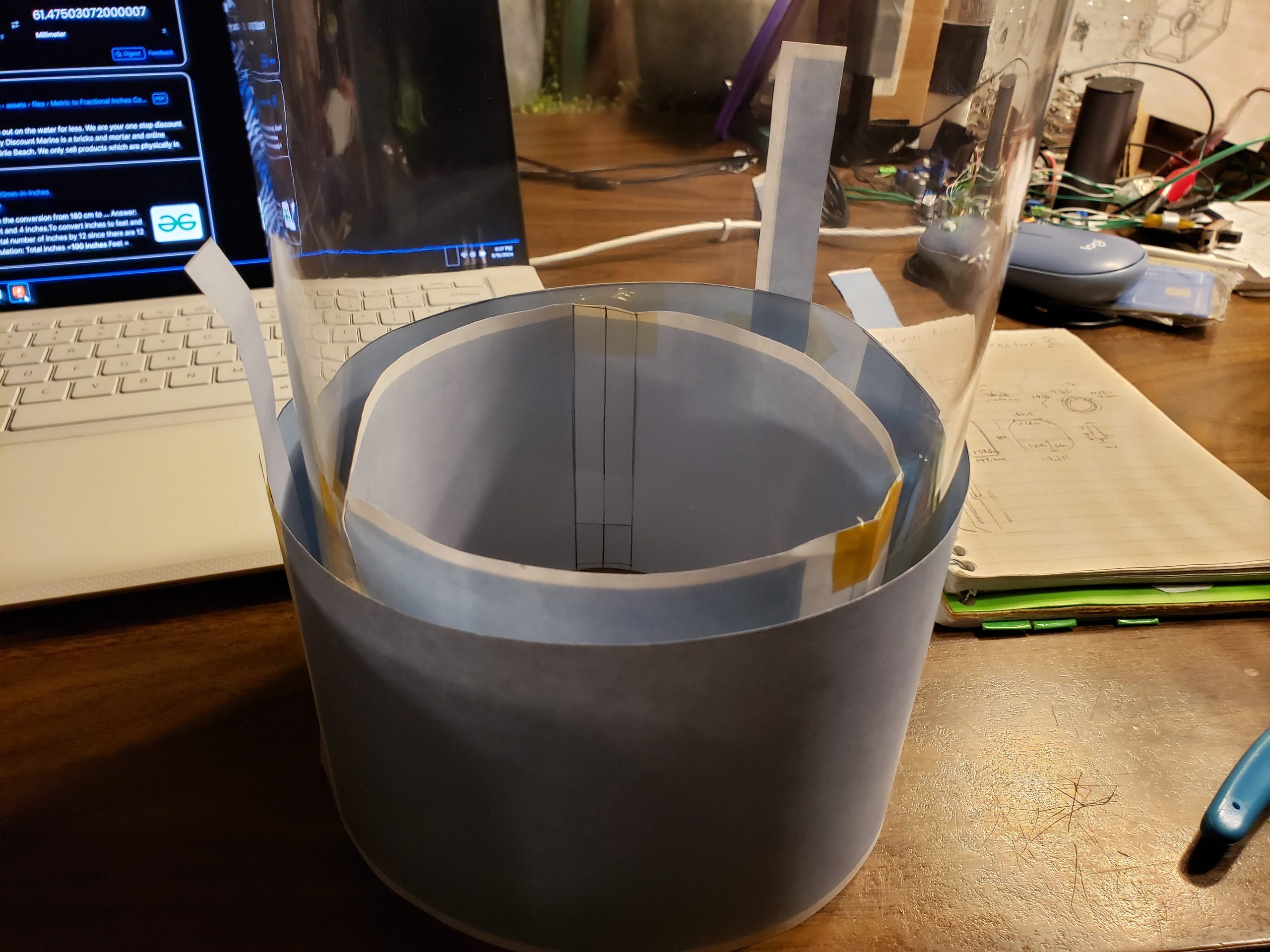
Getting the electrode sizes right
Testing the tolerance
Smaller Cathode is inside the bell and the larger Annode is outside
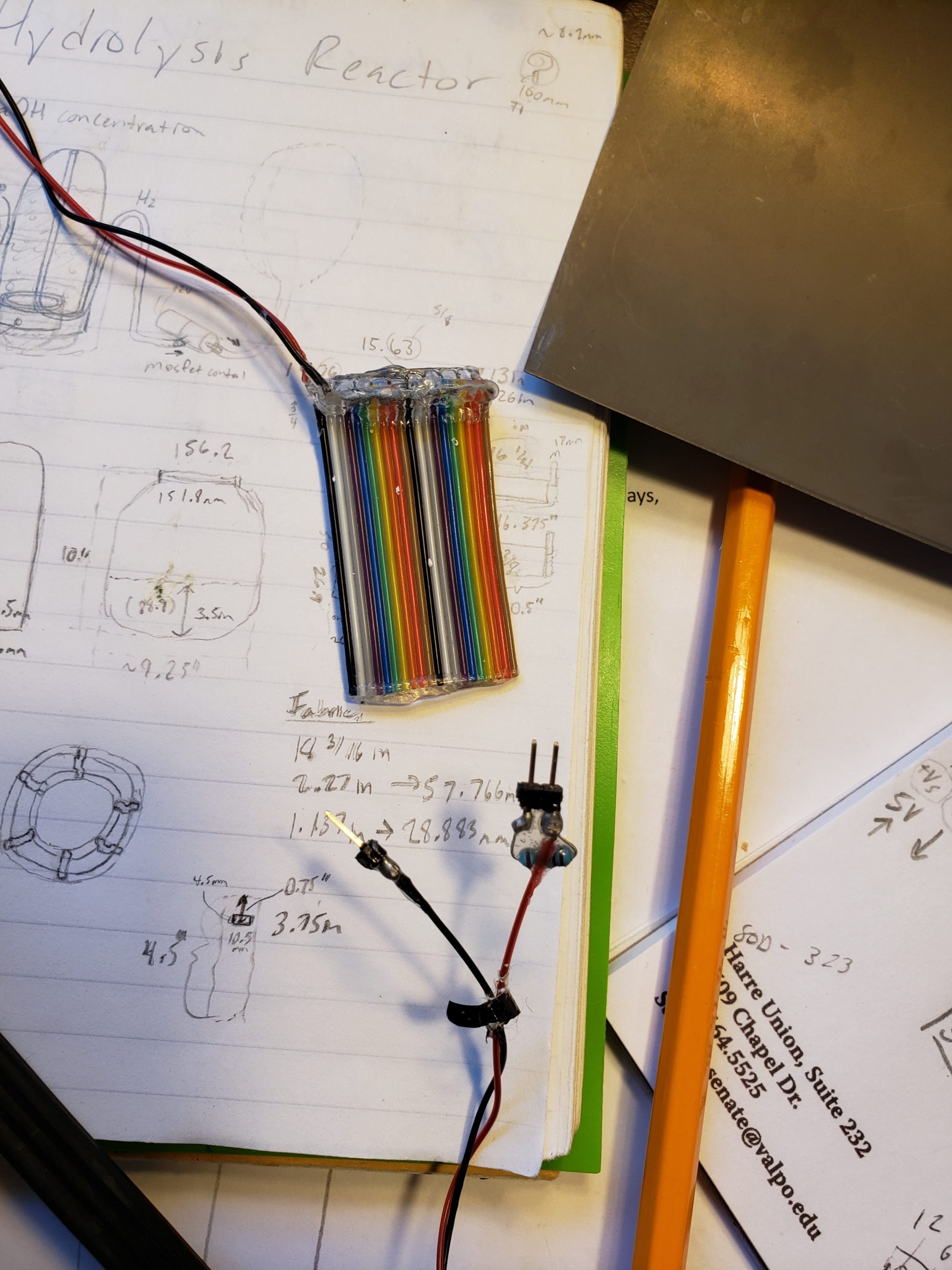
The electrodes with dual leads to make up for the low conductivity
The capacitive water level sensors
I needed to make the anode two parts to fit in the base
The reactor filled with electrolyte
I use the pump to pull the air out and the water up
Running the reactor and testing the output in soapy water for oxygen contamination
The red material is likely from side reactions with contaminants. The darker material is TiH2
I wasn't able to get the sensors working for the test but they survived a bath in the reactor
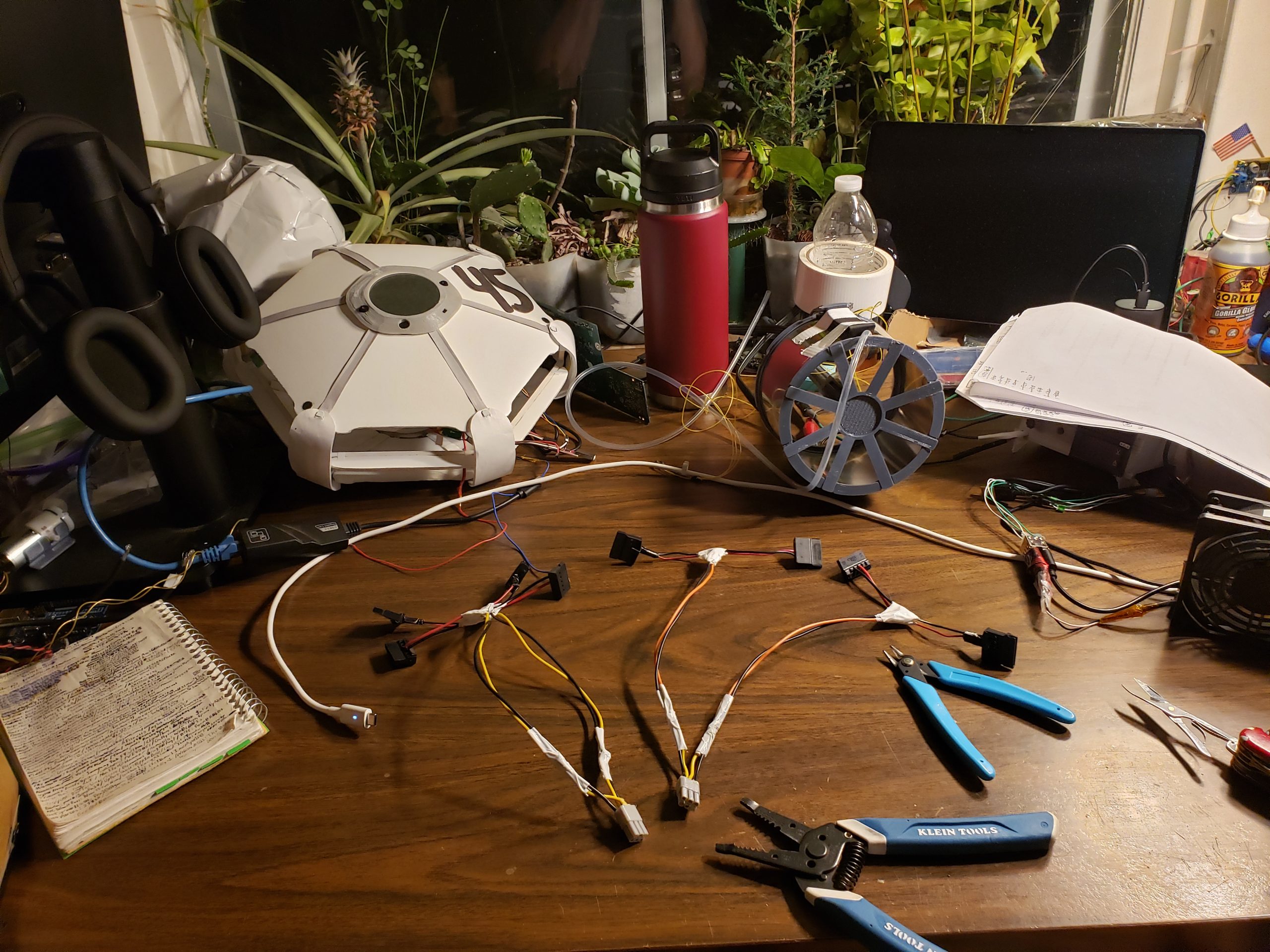
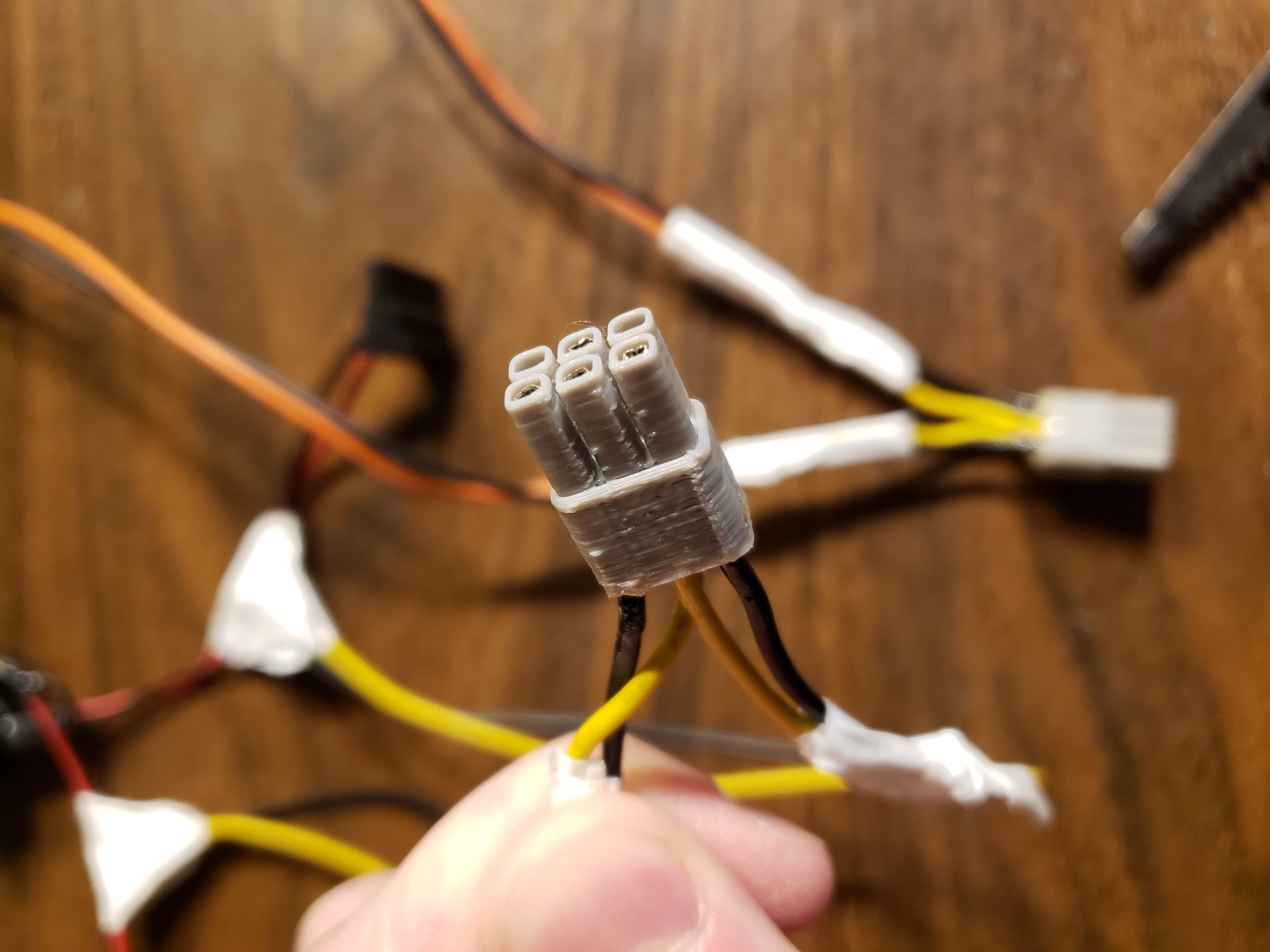
Making power leads for the drives
A 3D printed 6-pin ATX power connector
What's Next?
I’m away for this week but I’ll get back to work soon
I wanted to post every week over the summer but that wasn’t very realistic with work. I generally don’t have much progress to show at the end of every week. Add on the fact that my server had multiple issues and I wasn’t able to post much. For the rest of the summer I’ll only post with overviews of significant milestones.
I don’t have all the parts I need to rebuild the reactor so I’ll pivot to programming the first tile now that my server is back up.