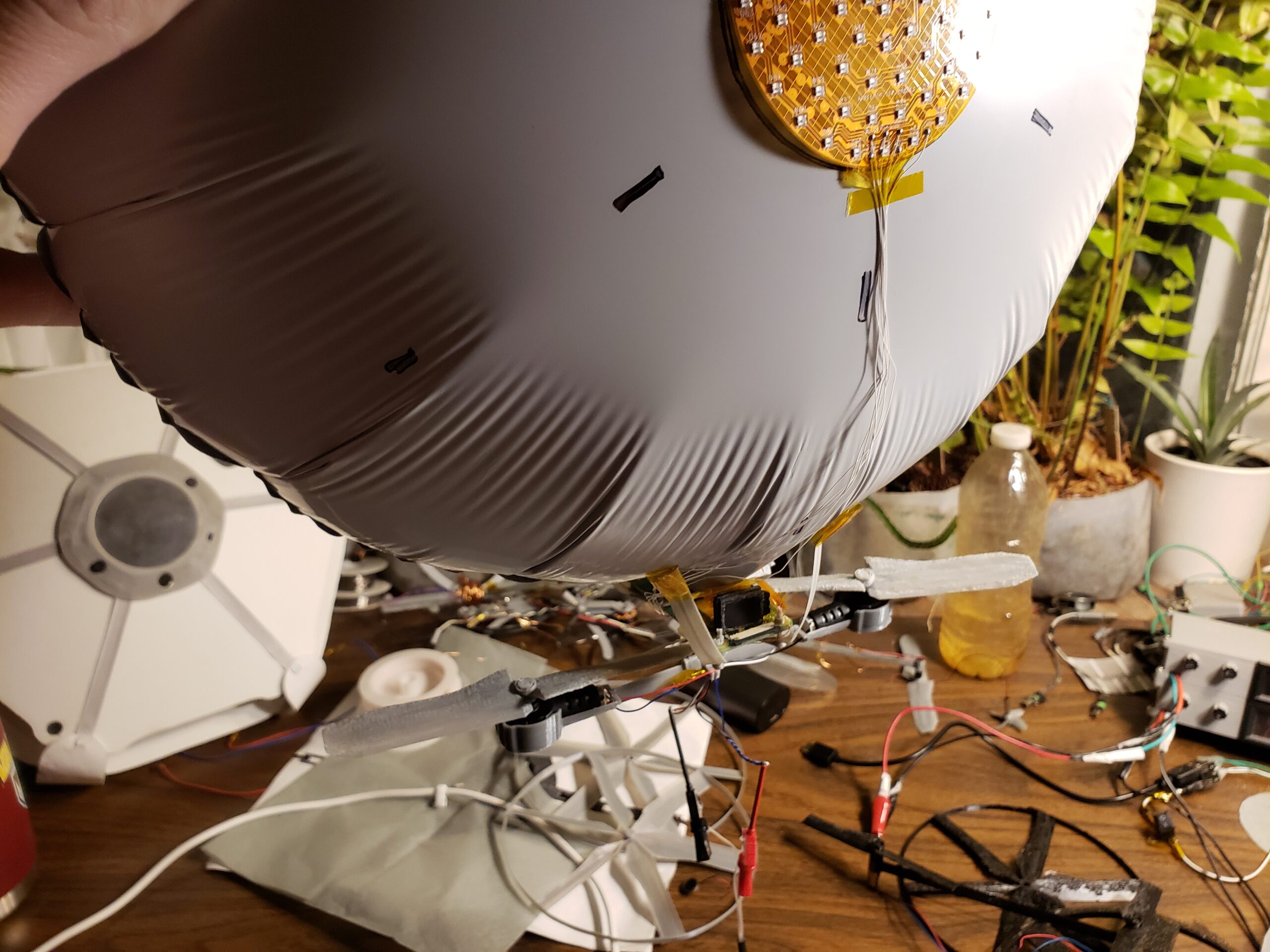
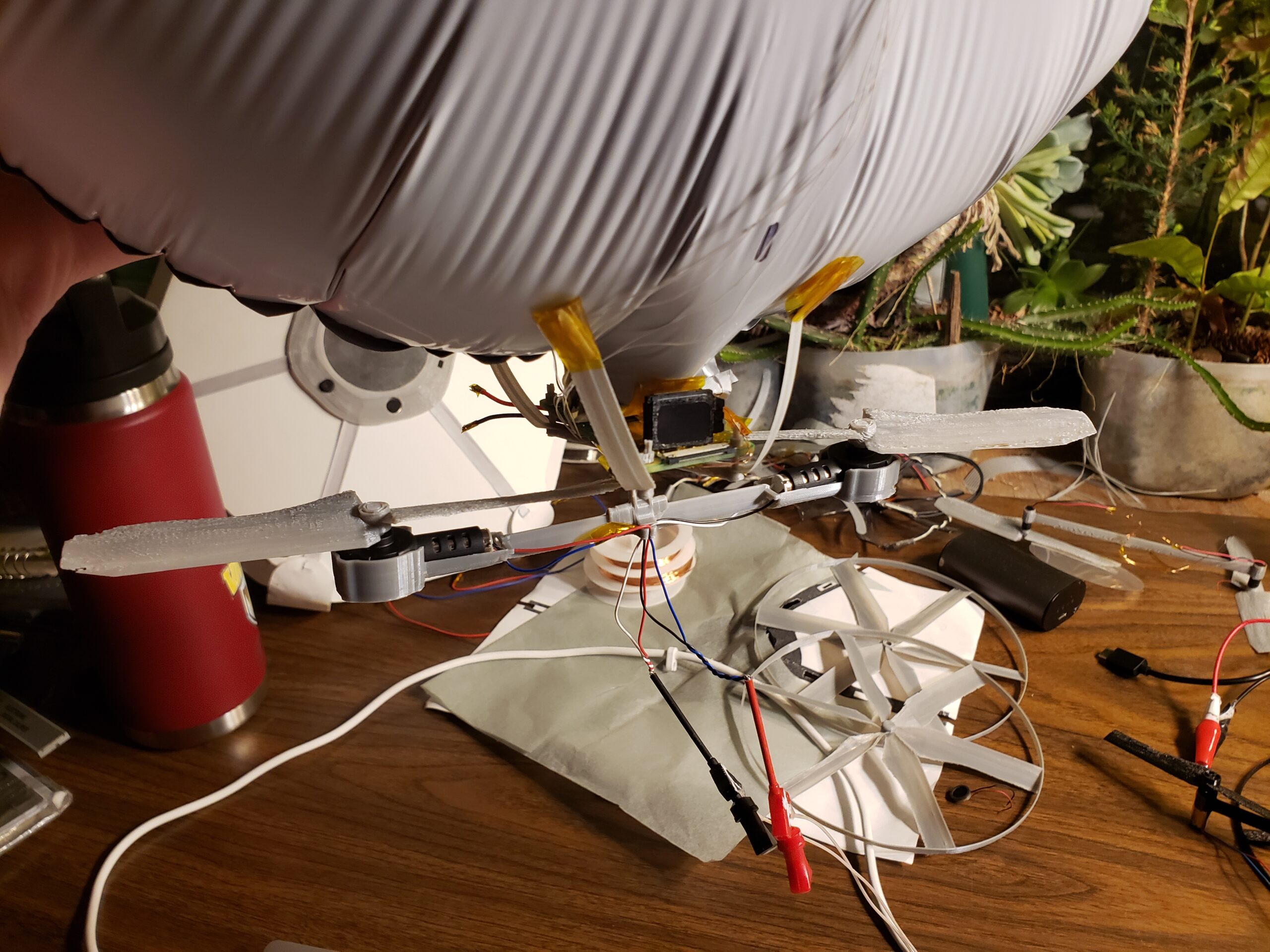
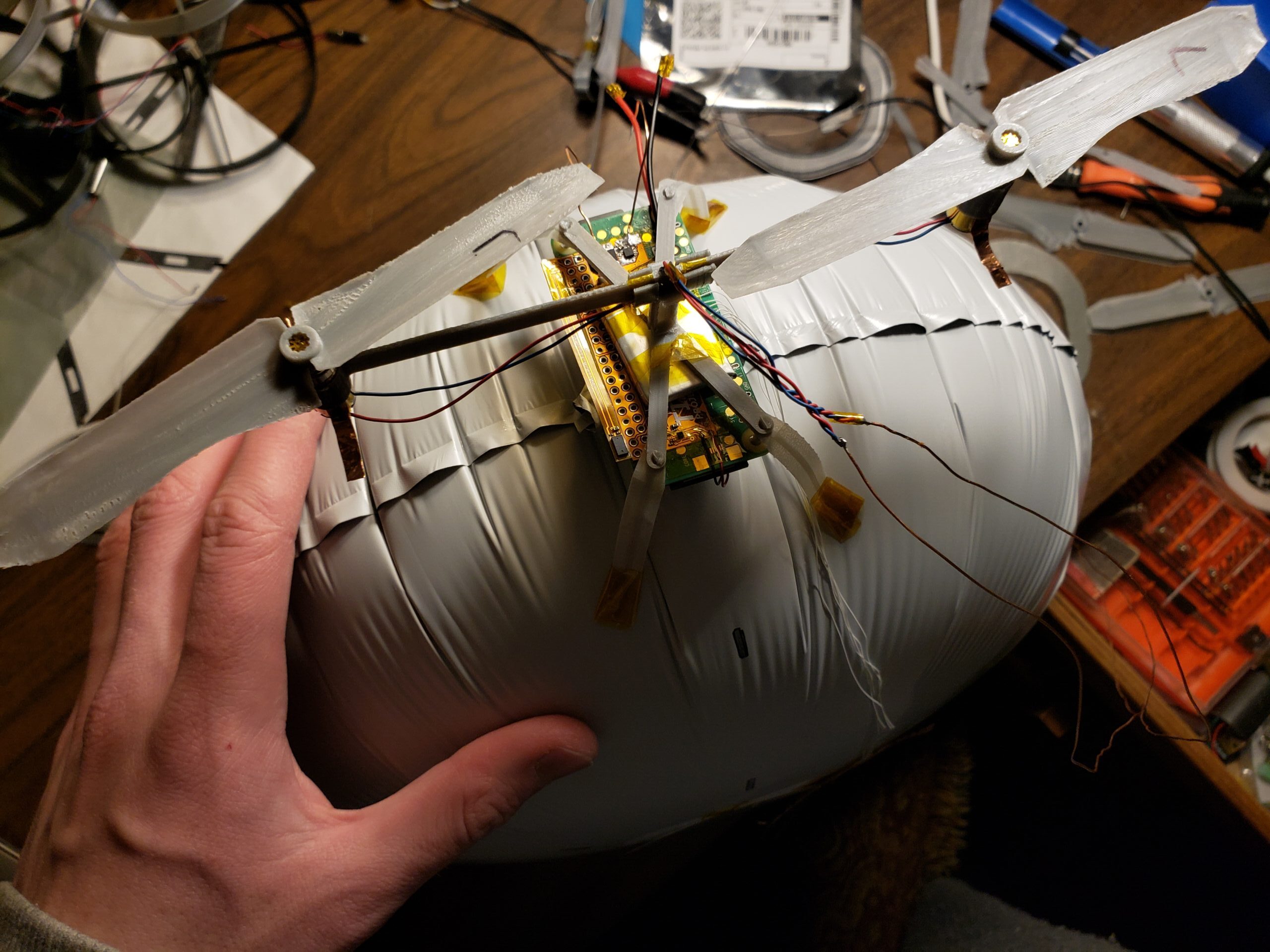
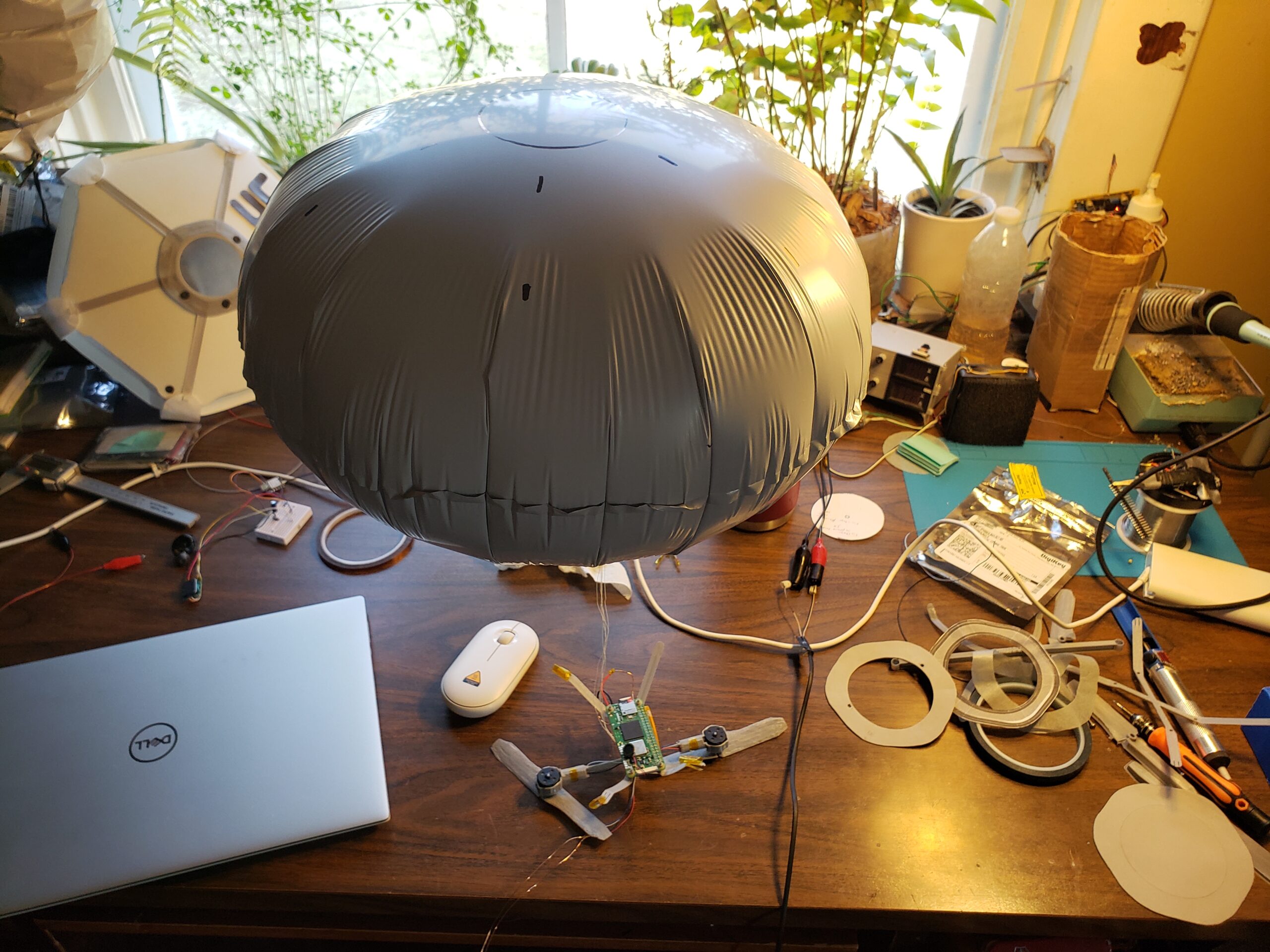
I could refine the V2 hardware more but it will always be loud and have a short battery life
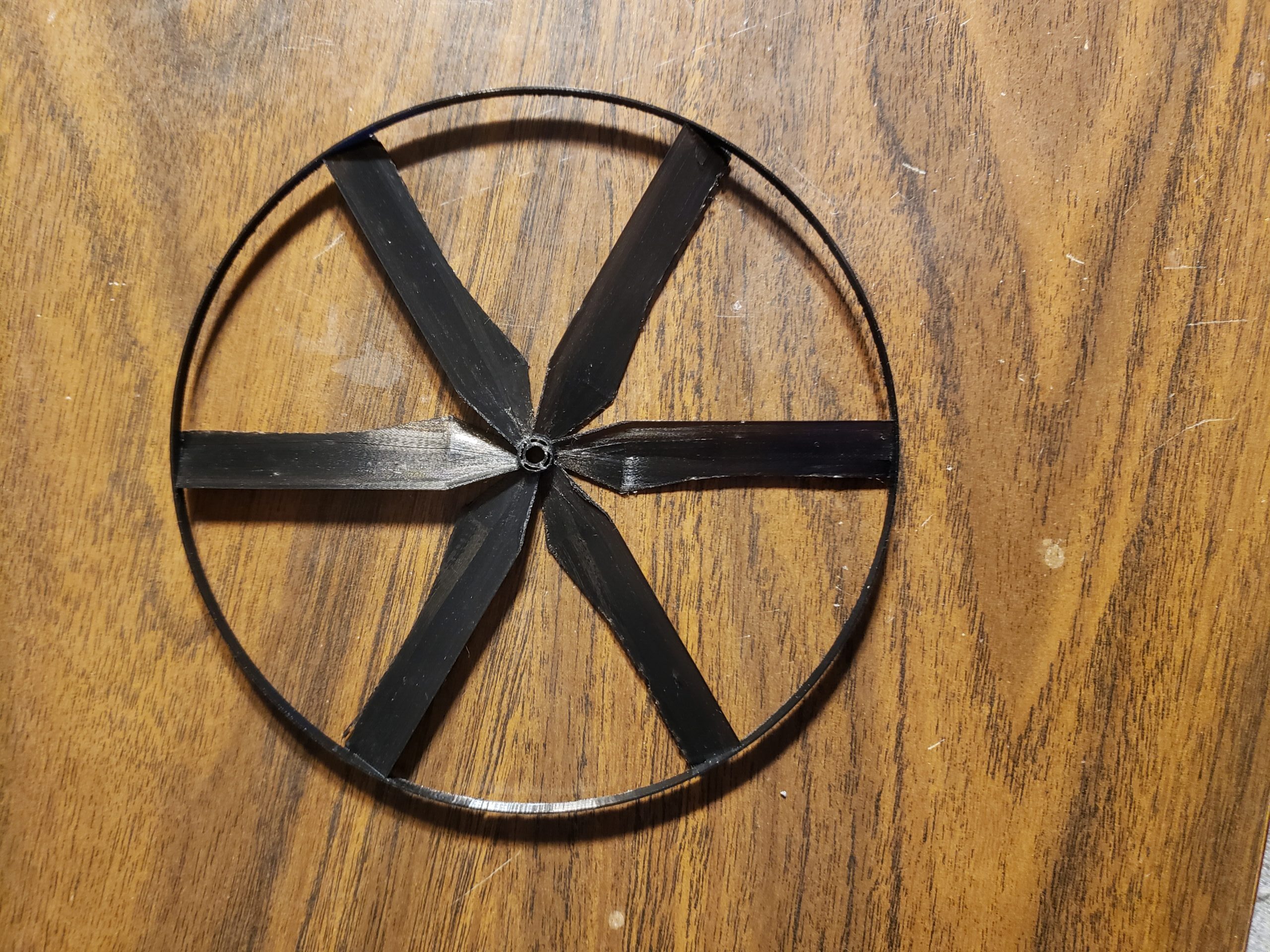
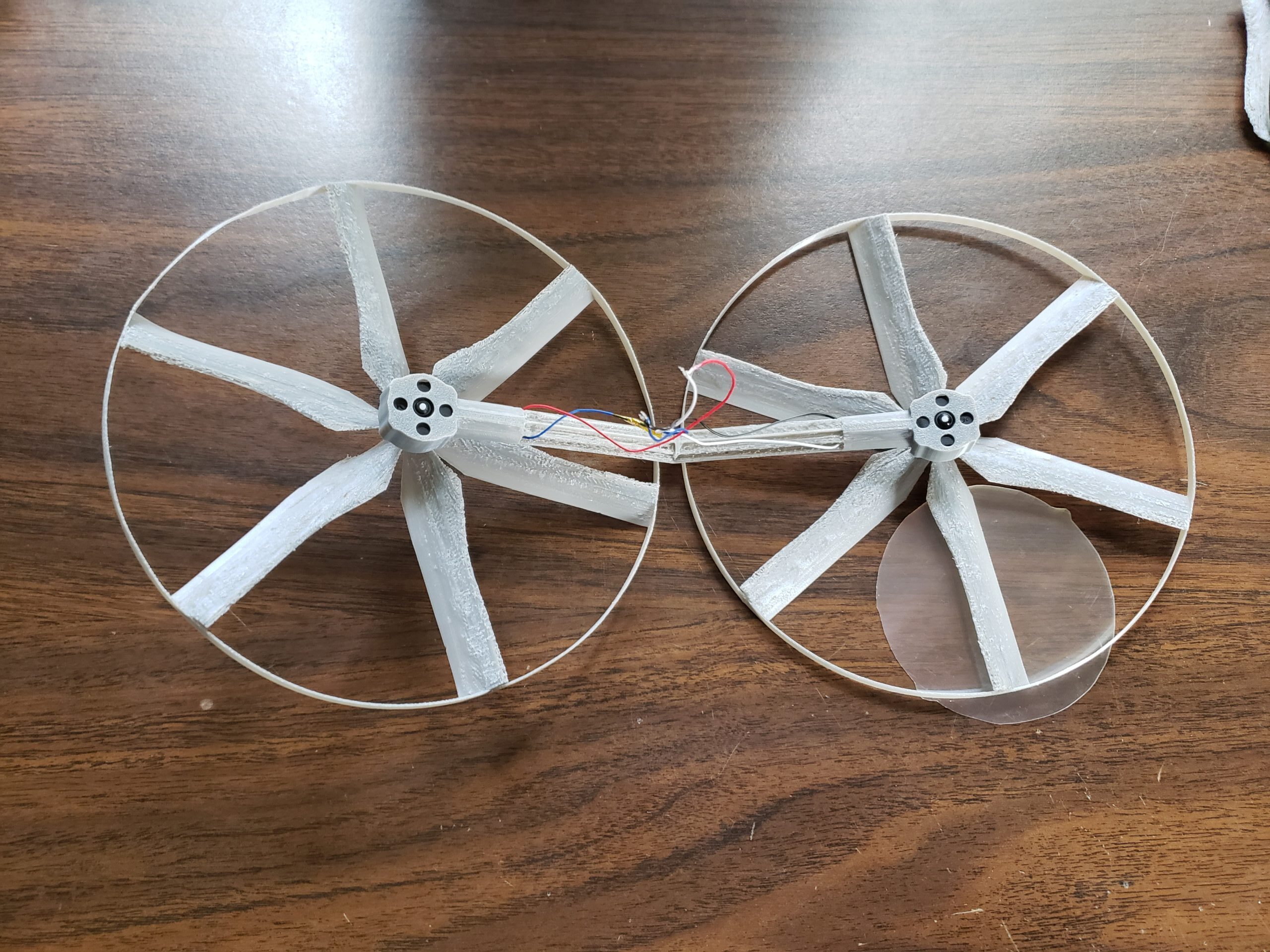
I found that the ducts I designed last week were too heavy and caused some air backflow. I ended up switching back to open props but I wanted them to be safe around people. This was one of my test setups with two geared 7mm motors and 6 blade ring-props. I should’ve made the center bar stiffer and PLA probably would’ve performed better but it did fly. The geared motors were the only ones that provided enough thrust to get it in the air but it was too loud. A design like this is capable of moving relatively quickly if I manage the motors right but the flight time would be short.
A Short Tethered Flight
I do plan on flying it more once I get the new mosfets in
I actually don’t mind how this design looks though it is far from complete. I felt it would be a waste of time to finalize the look if it doesn’t even fly yet. The ring props are effective at preventing damage when it runs into things but I made the blades a little too thin. I desinged these props with a thicker outer ring becasue I though I might put then a slight “V” angle to allow the Tile to “drive” on the ground. This could be an interesting design but I found they struggled to lift the Tile when completely horizontal. Its on my todo list to redesign the props/motor-bar to be more lightweight and robust. I’ll switch the center bar to an “I” beam like I used to use and reprint everything in PLA (which is slightly less dense and more rigid). Hopefully I’ll have a battery flight demo for next week.
Porting Python to C for the Esp32
I was able to port the emotion code in one night! (though it took another to fix all the bugs)
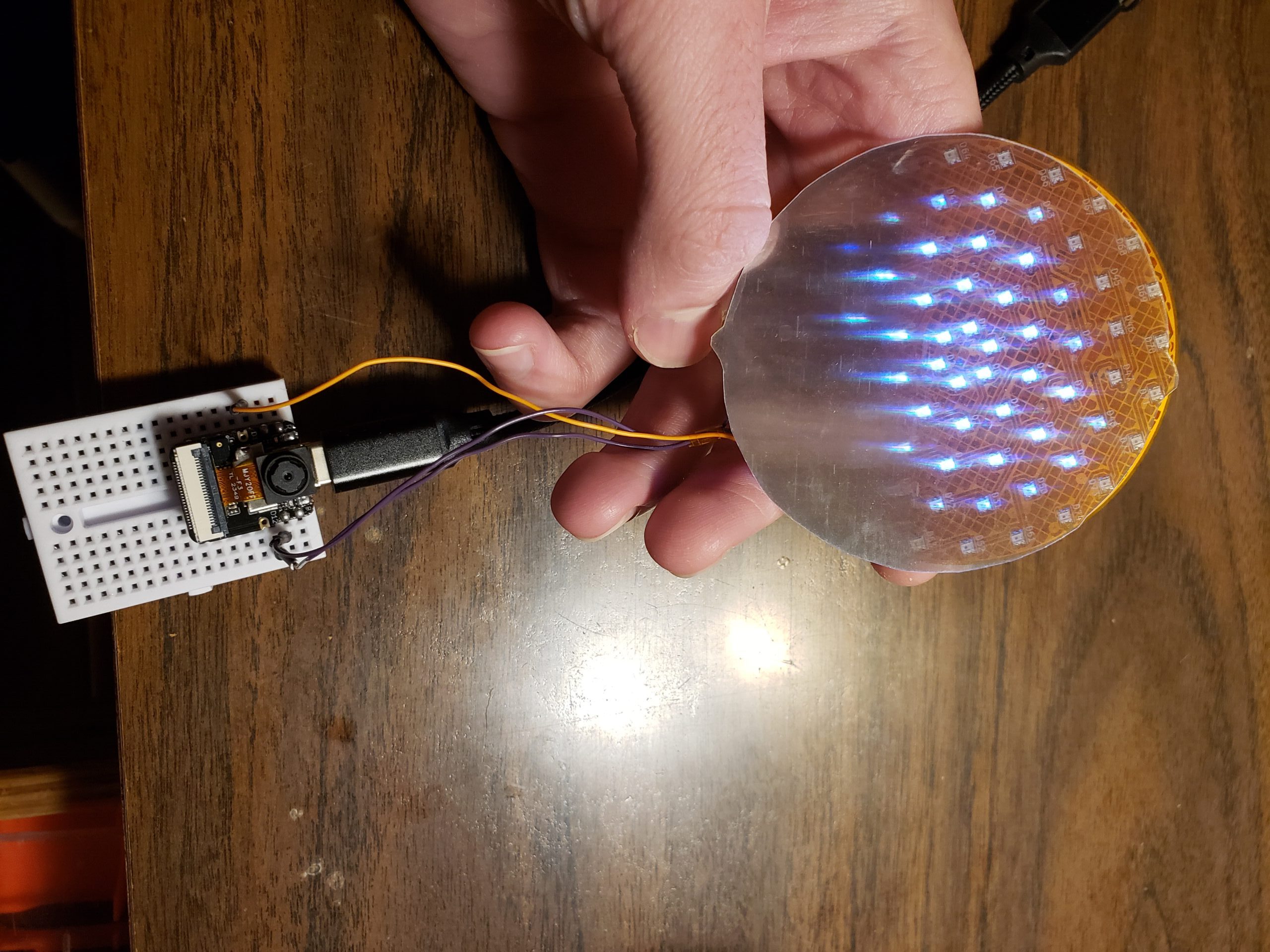
While I was working on the V2 hardware I had the idea to use the raspberry pi as a middle man for the esp32. I struggled to get the esp32 connected directly to my server in tile24 but having the raspberry pi or my phone in the middle can actually be helpful. I found that bluetooth can be a viable option for transmitting the audio with significanly less power draw. I already have recieving audio over bluetooth working on the esp32 and I ported my emotion control code but sending is harder. I will also need to rework my raspberry pi code to forward the audio from the esp32 to the server. The balloon lifts a max of 7.6g so here is the weight breakdown for the V3 hardware:
Camera: 0.5g
Circuit board estimate: 1g
90mAh Battery: 2.9g
2 Motors/props: 2.2
Speaker: 0.6g
Total: ~7.2g
I plan to continue the V2 for a little longer and get it flying on battery power but I will be putting more design effort into this V3 hardware. Getting it to fly on hydrogen alone will solve the noise issue and make it enjoyable to be around.
This Week's Gallery:
Plans For Next Week:
Fix V2 Circuit and Battery Flight Test/V3 Research
I was a little too ambitious last week because flight is hard. I also had that V3 idea nagging at me the whole time and I just wanted to research that. I did order some larger spherical balloons which will let me get the V2 hardware in the air quietly (though not in the form factor I want). My main goal is to do more research/testing with bluetooth and the esp32. I already have the emotion code ported but figureing out the bluetooth will take longer. It would be easier to use wifi so I’ll consider making the esp and access point if I can’t get the bluetooth working.
Todo List:
Replace the NPN mosfets with PNP and get the Tv2 to fly on battery power
Figure out bluetooth transmission on the esp32
Trim down the raspberry pi script to pass through the audio