
Tile v2 Project Overview

An AI Companion Passion Project
Making a Daydream into Reality
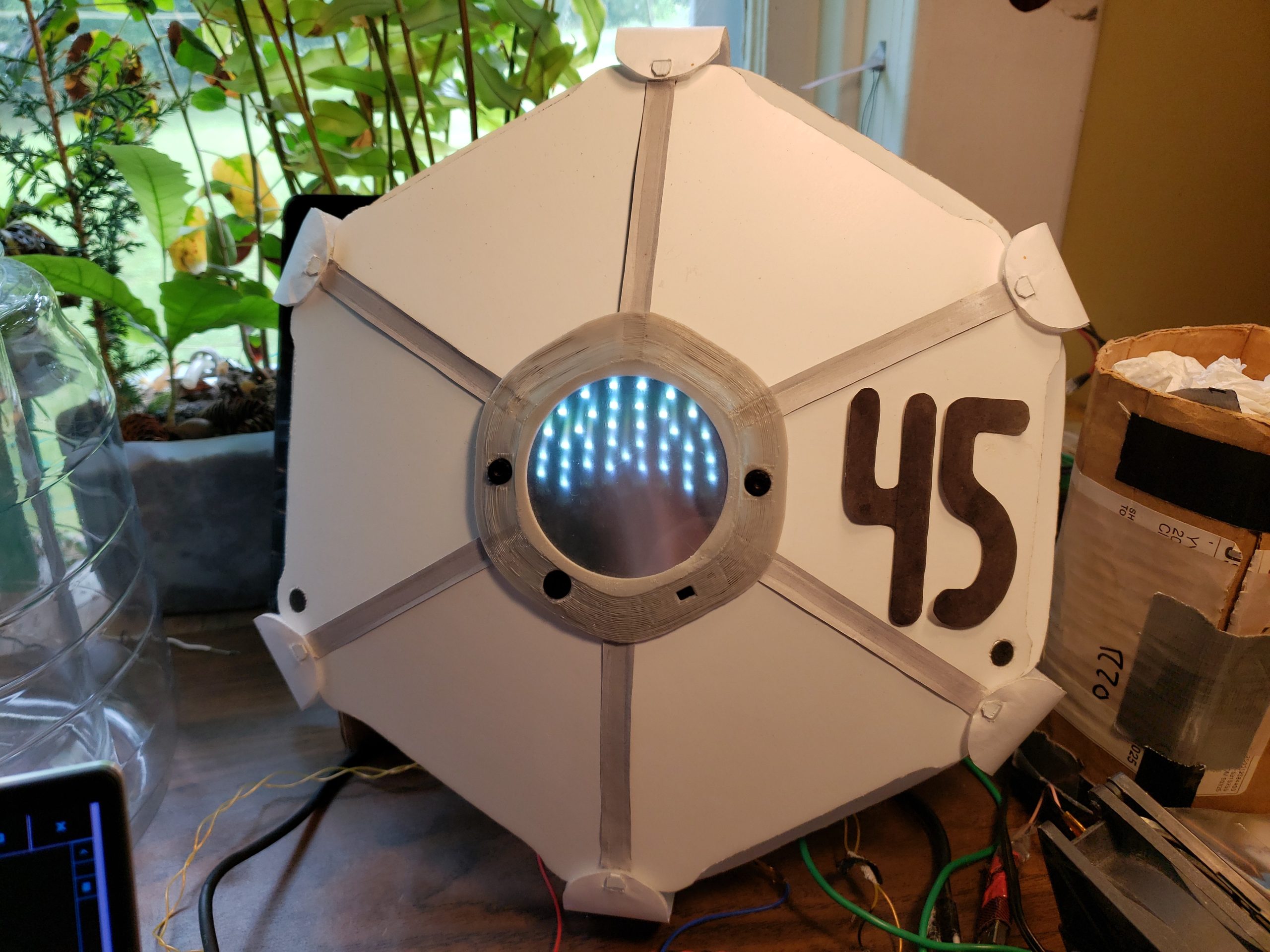
When I started drawing sketches of the Tv1 last year I had no idea that I would be dedicating hundreds of hours to the project. I had been tinkering with self-hosted AI on my server and I felt that I finally had the skills (or at least I could gain them along the way) to build my robot. Back in my highschool days I would daydream and sketch pictures of very similar looking robots (we all had daydreams about robots right?), although back then I drew them as octagons. I thought that these robots would be numbered and my robot always had the number 45. I thought that they might “tile” together based on their shape which is where the project name came from. This design was pulled straight from my daydream which is why I’m so motivated to make it reality. See tile1 for nostalgia.
Project Abstract
This design focuses on AI’s current strengths
I’m on a mission to build a flying AI companion robot that is quiet, appealing, safe around people, and has personality. We all know that online chat bots like ChatGPT are extremely useful for learning and productivity. The robots we have (so far) fail to be as useful. Robot dogs aren’t widespread, drones have multiple stigmas against them currently, and humanoid robots are expensive and movement limited (not to mention dangerous). My Tile design addresses these issues by focusing on the things AI is already good at. The Tile V2 is designed as a quiet, slow moving blimp robot dedicated to answering questions and providing support. Anyone can talk to an AI on their phone but this is isolating and there is no connection. I want my robot to be approachable and have a physical presence in a room so people are able to “actually” talk to it.
I built the Tv1 last year and I felt it was a success even if it couldn’t fly. I learned a lot and achieved a 1 second response latency between the client (Tile) and my AI server. The Tv2 is another stepping stone with the goal of quiet flight. I want to design an esp32 based board for the V3 but I have much to learn before then.
Rough Physical Sketch
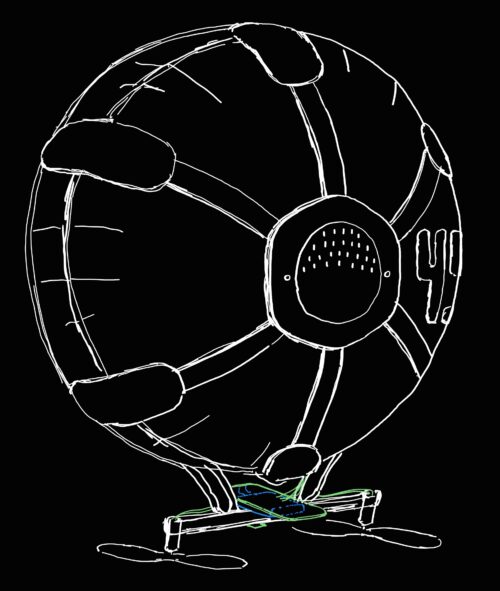
I want to base it around a standard 10″ balloon but also keep the look of the v1
The v1 was designed like a drone but this made it very loud and heavy. I tried to go the opposite direction with the Tv2 and make it as light as possible. This lead me to a blimp-like design which makes flight much easier. Now the balloon keeps the tile stable and I just need to provide enough thrust to lift the ~20g battery/circuit. I have two counter rotating blades to make good use of the area available under the balloon and to cancel the torque they put on the balloon. This design doesn’t require any programming to get it in the air and it should be much quieter then a drone. A primary design factor was that I wanted it to be safe around people and be appealing. The tile will be movement limited but I feel like this will only give it the personality and appeal humanoid robots and drones lack.
The tile needs to be able to communicate with the user so flight needs to be as quiet as possible. The balloon only lifts 3.5g at best so most of the thrust comes from the two motors. I use large blades to increase thrust at low RPM and reduce noise. I’m using hydrogen instead of helium as my lifting gas because I can generate hydrogen at home with my electrolysis reactor.
H2V4 Electrolysis Reactor
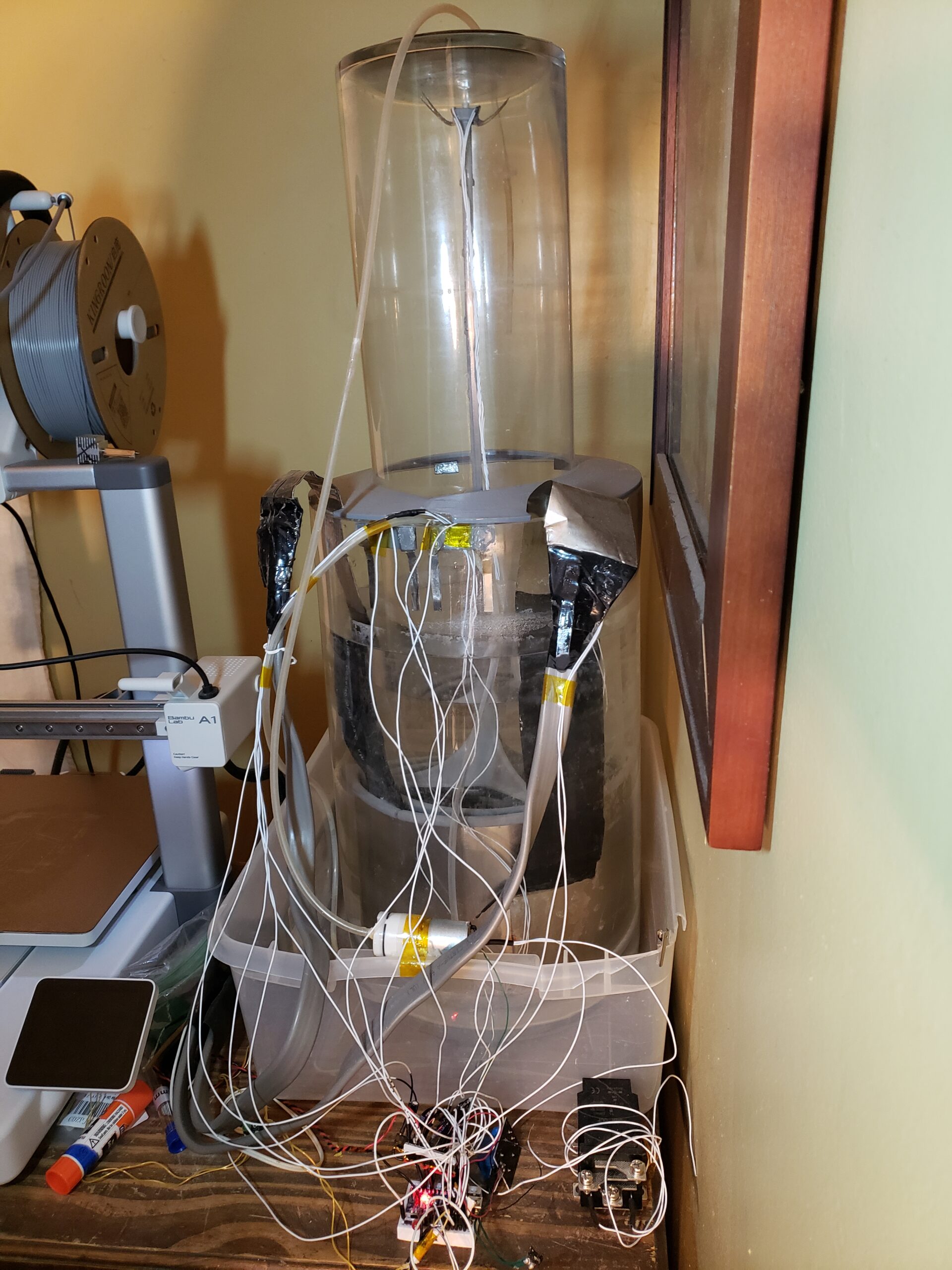
It has redundant sensors and a full glass build to make hydrogen generation as safe as possible
The blimp design vastly simplifies flight and allows me to make the robot much quieter than a traditional drone. This comes at the cost of requiring a lifting gas. I can use helium of course but I wanted something that could be generated at home for ‘free’. I had experience designing electrolysis reactors from my highschool days so I decided to scale that up. My current iteration is the H2V4 which has a higher focus on safety then my three previous prototypes (see tile27). The H2V4 makes topping off the robot up every 1-2 days convenient. From testing I will also need to fully replace the gas every week to avoid oxygen leaking in. Pure hydrogen burns hot but the 10” balloon doesn’t hold enough to be dangerous. I do need to worry about HHO (not H2O but it really wants to be!), which is why I’ll do extensive testing and replace the lifting gas regularly. In industry a 60% Helium, 40% hydrogen mix is often used so I might also consider this. The H2V4 has been rock soild so far and has allowed me to move on to other parts of this project. You can see the H2V3 in action in tile19.

Tv2 Circuit Design
Flexible circuits come with inflexible constraints
The first circuit I designed in tile25 had issues but I learned a lot. I designed this circuit to (hopefully) be overkill when delivering power. I went with a flexible circuit to save weight but they have very thin copper layers. This lead to wires melting off my old board when I tried to run larger motors. I tried to get around this issue by exposing copper so I can add solder for more current/thermal capacity. The three large ICs on the right are to drive the two main motors and a movement motor (-eventually). I have a buck/boost regulator to supply the raspberry pi with 3.45V (which is then regulated to 3.3 and 1.8 by the Pi). I have an MPU-6500 for acceleration/gyro/temperature measurement. There are inputs for the microphones and outputs for the LED eye. Lastly there is a ToF sensor for altitude and a mono audio amp for speaker output. Whew! This board does a lot and I hope it will be my stepping stone to designing an ultra light esp32 based board (possibly for the V3).

Test Programming Platform
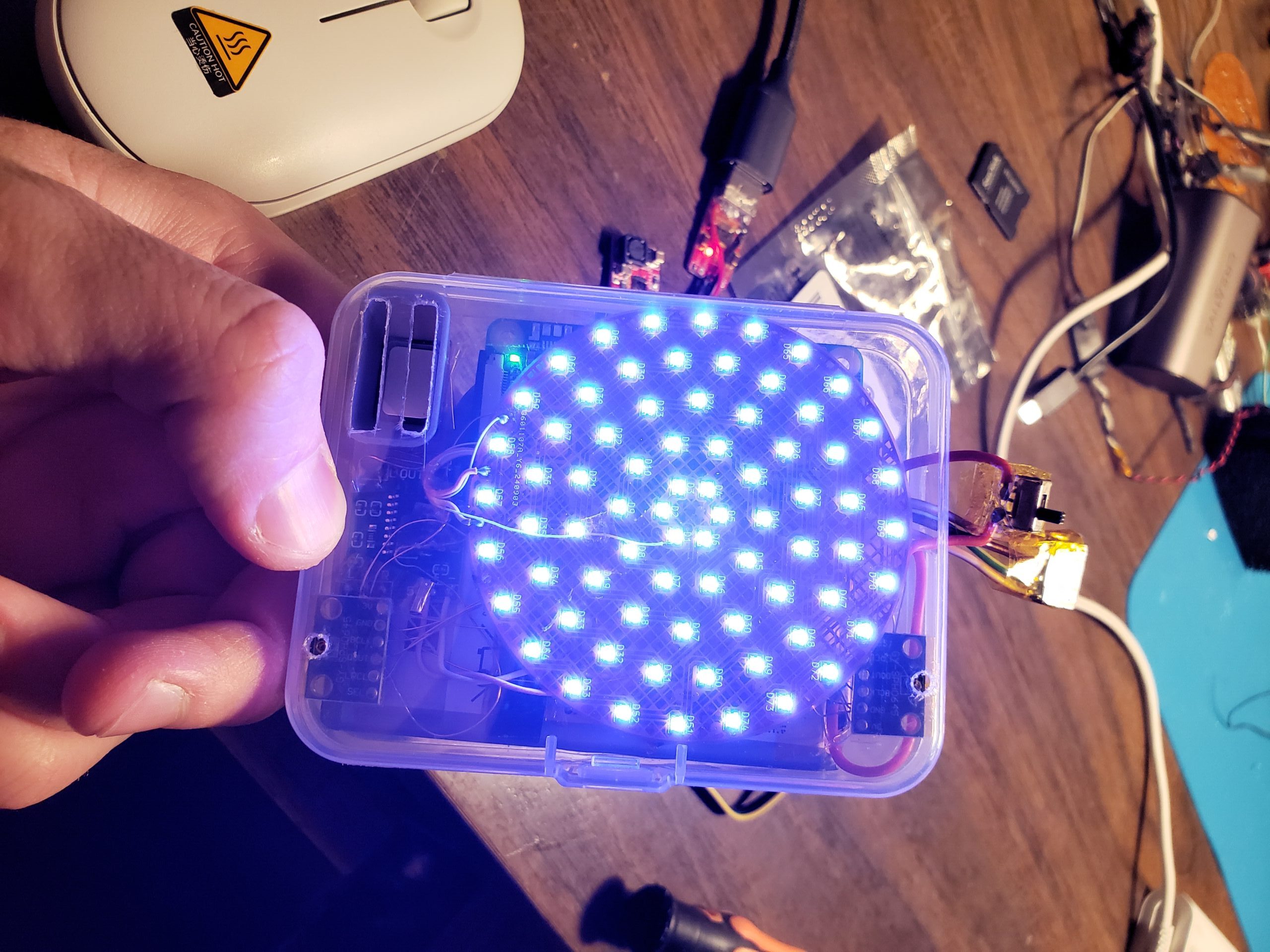
While I’m working on the complete Tv2 hardware I can test this circuit
Currently this circuit is able to connect to my server and receive responses but there are multiple issues to work out. I’m running the same Tv1 code that I demoed in tile14 (probably my favorite post) but I’ll need to do some more tweaks for this new hardware. I know all the hardware in this box works but it will take me some time to get the old code worked out. The new circuit board hasn’t come in so this will be my focus in the coming weeks.
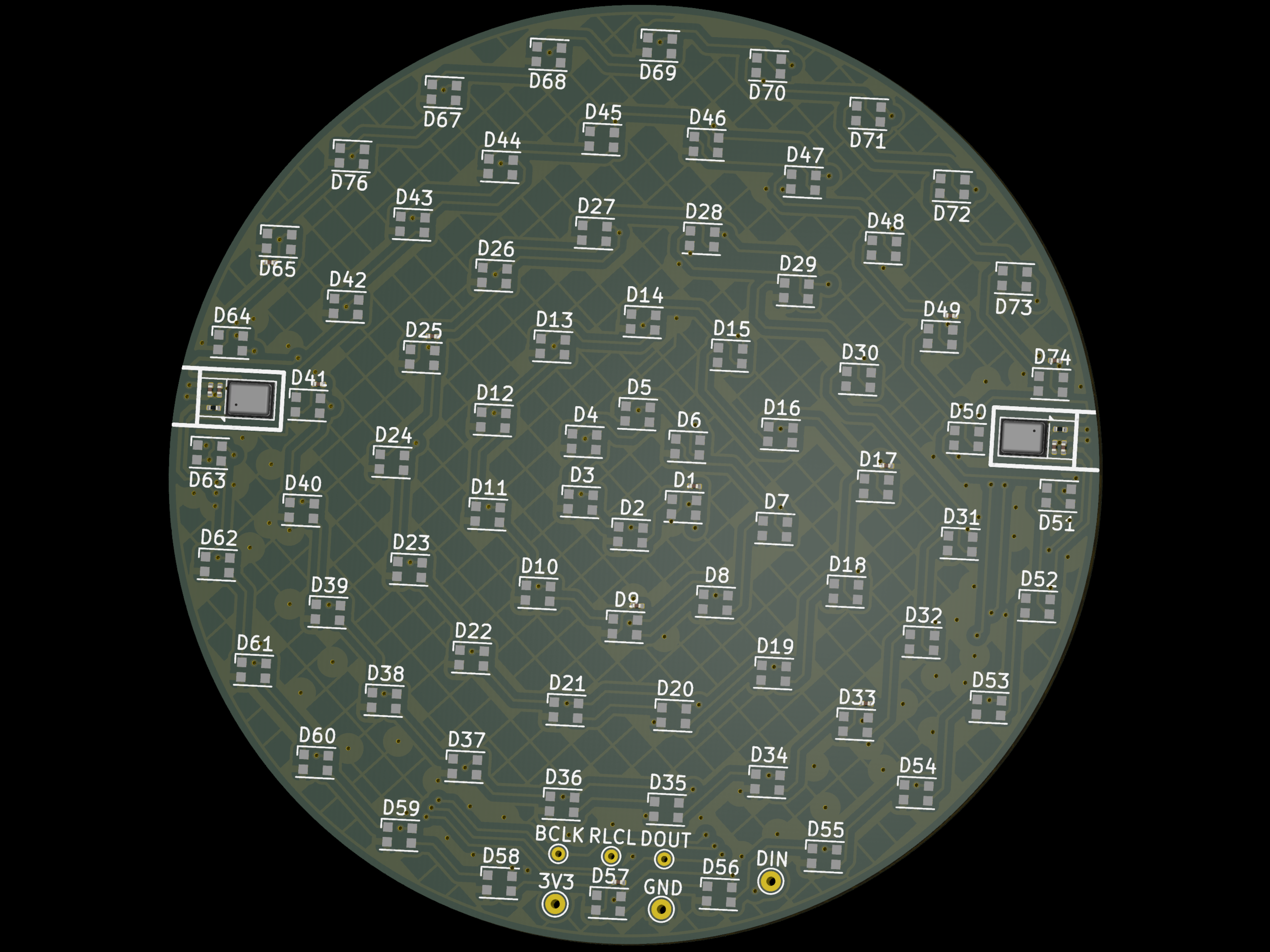
This Week's Gallery:

Plans For Next Week:
Circuit board delayed so more programming this week
I have the test circuit worked out and I’m finally able to connect to my server over the internet so those issues are solved. I still have some bugs to iron out in the Tv1 code and the microphones have issues so there is plenty more work to do (like always).
Todo List:
- Fix: server script stops accepting clients sometimes
- Fix: Client “wakeup” trigger threshold
- Microphone audio input is too quiet